
Supermarket packaging: how does reuse work?
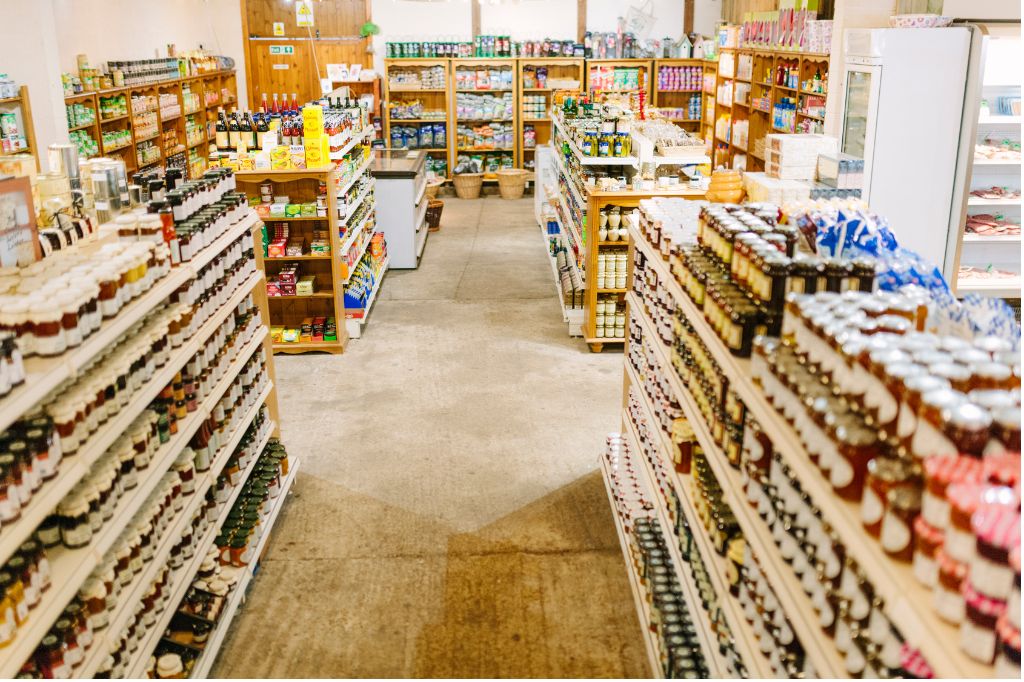
In supermarkets, reuse relies on an organized loop from shelf placement and purchase to the return of packaging, collection, washing, and then recirculation. Reusable containers can include both products sold to consumers and certain packaging used for transport and logistics […]

Article summary
- Supermarket packaging in summary
- What reusable packaging can be found in a supermarket?
- Secondary and tertiary packaging
- Primary packaging is returnable.
- How do secondary and tertiary packaging materials circulate in large retail outlets?
- Steps 1, 2 and 3 – From Reception to the Shelf
- Step 4 – Returning the empty containers
- Step 5 – Sorting, washing and repair
- Monitoring the container fleet
- How does the deposit system for reuse work in supermarkets?
- 1. Product identification on the shelf
- 2. Resumption procedures
- 3. Storage before collection
- 4. The packaging is washed and then put back into circulation
- How does reuse change the organization of a supermarket?
- Please allow space for returned packaging.
- Integrating new tasks into the teams' work
- Organizing the return of packaging: hygiene and breakage
- Financial monitoring of the deposit
- What is the current status of the deployment of reuse in French supermarkets?
- Why industrial washing influences reuse in large retail outlets
- FAQ
In supermarkets, reuse relies on an organized loop between shelf placement, purchase, return of packaging, collection, washing, and then recirculation. Reusable containers can include both products sold to consumers and certain packaging used for the transport and logistics between suppliers, warehouses and stores.
How do these containers circulate between the supplier, the platform, and the point of sale? How does their management change the daily organization of a supermarket? ETERNITY Systems, a major player in the reuse of packaging, explains the operation and opportunities of supermarkets to have reusable containers.
Supermarket packaging in summary
- Two types of reusable containers coexist in mass retail: Secondary and tertiary packaging, often used for logistics and transport. And primary returnable packaging, which is mostly in contact with the products such as bottles and jars, and which leaves the point of sale with the customer.
- The collection of returnable containers is based on two methods, the self-service machine, which scans and stores returned packaging, and semi-manual retrieval by an employee equipped with a handheld scanner.
- The ReUse system, piloted by Citeo and tested since June 2025 in four French regions, is testing on a large scale a shared loop in which standardized and returnable food packaging is sold in supermarkets, returned by consumers, collected, washed and then put back into circulation.
What reusable packaging can be found in a supermarket?
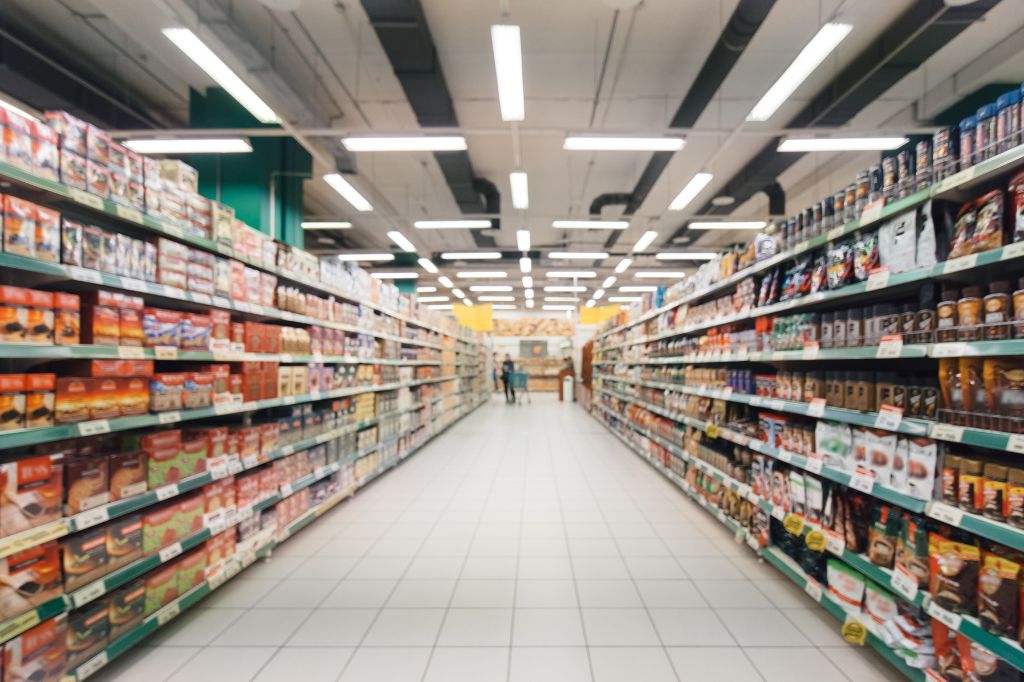
Two types of reusable containers can be found in a supermarket:
- Secondary and tertiary packaging
- Returnable packaging
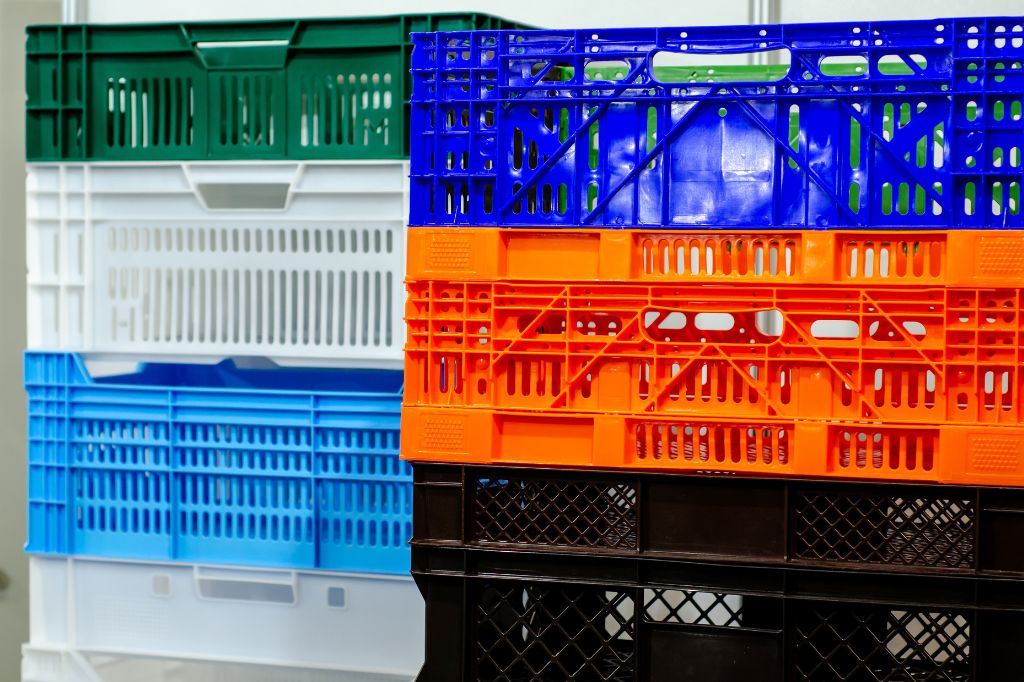
Secondary and tertiary packaging
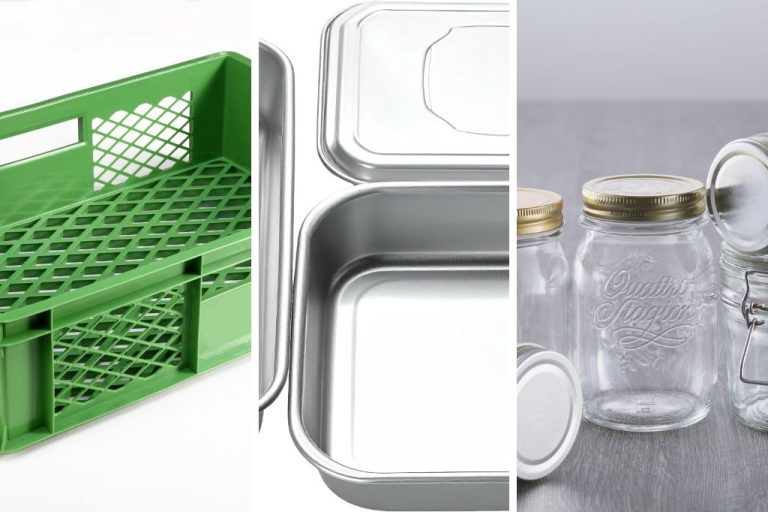
In the mass retail sector, this family includes agri-food crates. used for fruits, vegetables, meats, fish and baked goods, as well as bins, pallets, and boxes. These are either secondary packaging (which groups several sales units to facilitate handling) or tertiary packaging (which is used for transport and heavy handling).
These containers are never sold; they are provided by the supplier or by a specialized operator such as ETERNITY Systems, then collected empty, washed and put back into circulation until the end of their life.
Primary packaging is returnable.
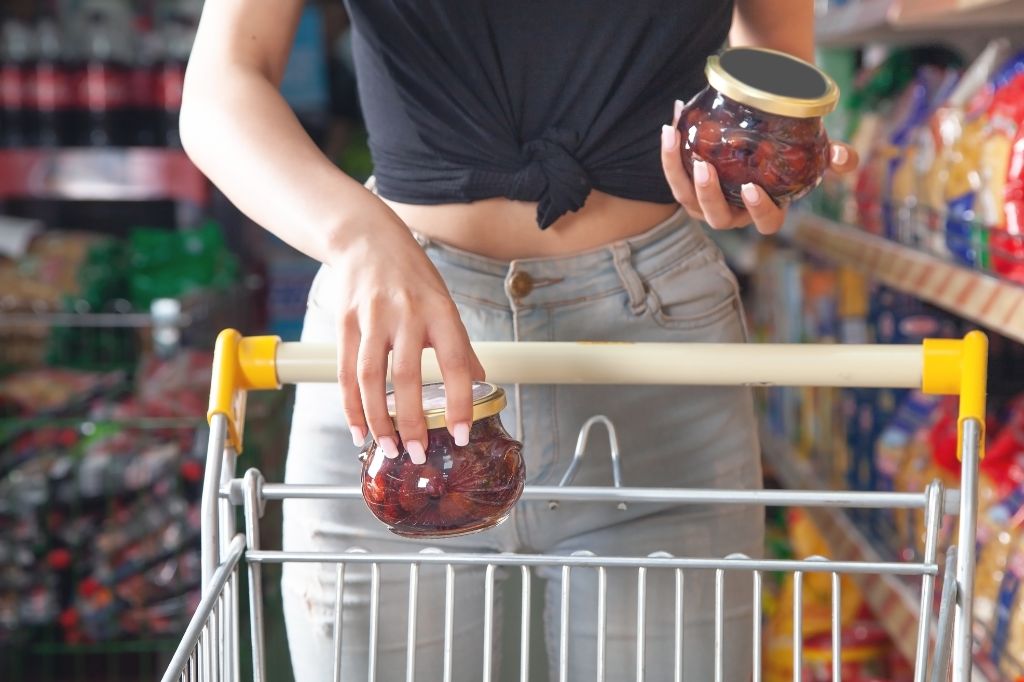
A primary packaging is the one who comes into direct contact with the product. EIn a supermarket, it's mainly glass bottles and jars. These containers can be sold with a orderThis means an amount added to the product price and refunded upon return of the empty packaging. In the system being piloted in France with ReUse, launched in June 2025 in four French regions, This deposit is between 10 and 20 cents. depending on the format.
This deposit system for large retailers assumes that the packaging leaves the point of sale, returns, and that The supermarket is organizing this takeover.
How do secondary and tertiary packaging materials circulate in large retail outlets?
In large-scale retail, secondary and tertiary packaging (crates, bins, and pallets) travels back up the supply chain in reverse. That is to say, after having been used to transport the products to the point of sale, They are not thrown away, they are collected, grouped, checked and put back into circulation in 5 steps :
- The supplier fills the crates or bins and ships them to the brand's logistics platform.
- The platform distributes the goods to the stores., usually on pallets.
- The store empties the containersthen folds them, nests them or stacks them to reduce their volume.
- The empty containers are returned to the logistics platform., often in trucks returning after making their deliveries.
- They are sorted, checked, washed and possibly repaired., before being made available to suppliers for a new cycle.
This return journey does not require any additional transport, as it uses the trucks that have just made a delivery and would otherwise leave empty. This principle has a name, return logisticsand it conditions the overall economic balance, because A reusable container is only worthwhile if its return is inexpensive.
Steps 1, 2 and 3 – From Reception to the Shelf
Crates, bins, and pallets first arrive at the store's receiving dock with the goods they protect during transport. In the fruit and vegetable aisles, for example, some crates can be placed directly on the shelves and to serve both as transport packaging and as a presentation stand.
Once the products are removed, the containers are grouped together. The collapsible crates are folded down and the stackable bins are nested inside each other.in order to significantly reduce the volume occupied during the return journey.
Step 4 – Returning the empty containers
Empty containers are temporarily stored in the store's logistics areaand then picked up again during a subsequent delivery run. One of the advantages of the system is to utilize existing transport flows as much as possible. A truck that has just delivered to a store can thus leave with empty pallets and crates rather than returning empty.
Step 5 – Sorting, washing and repair
From the platform, the containers are directed to a treatment center, which may belong to the brand, the supplier or a operator specializing in the management of reusable packaging parks such as ETERNITY Systems.
They are there first sorted by model and referenceIn a shared park, several formats of crates, pallets or bins can indeed be collected in the same place.
Each container then undergoes several operations:
- monitoring of its condition;
- removal of damaged containers;
- reparation when possible;
- washing and disinfection when required by use;
- drying;
- grouping by reference.
The compliant containers can then be reinjected into the logistics network and then return to a supplier or packaging site to receive new goods.
Monitoring the container fleet
Unlike single-use packaging, A reusable container must be returned often enough to offset its manufacturing cost. The real challenge is therefore not just having sturdy crates or pallets, but knowing where they are and how often they are used.
How does the deposit system for reuse work in supermarkets?
The deposit system for reuse works like a loop :
- The customer pays a deposit with the product.
- Return the empty packaging to a collection point in the supermarket.
- Recover the deposit amount,
- Then the container is collected, washed and put back into circulation.
This mechanism is being deployed on an experimental basis in France as part of the ReUse scheme, supported by the eco-organizations Citeo and Adelphe.
In supermarkets, the system is based on 4 elements:
1. Product identification on the shelf
In order to be reported, the'packaging must first be easily recognizable' by the customer. That is why the containers in question have a marking on the glass and an indication on the label specifying that they can be returned.
To facilitate the large-scale deployment of reuse, Citeo has also developed a range of standardized packaging that can be used by several brands.
2. Resumption procedures
Once the product has been consumed, the customer returns their container to a collection pointHe is not necessarily obliged to return to the store where he bought it if the deposit network allows for a shared return between several retailers. Two systems exist:
- The resumption with a automated recovery The customer places their bottles or jars directly into a machine. This machine recognizes the eligible packaging, registers its return and stores it before collection.
- The semi-manual recovery : an employee collects the containers and scans them manually.
3. Storage before collection
Once collected, the empty containers are not immediately sent back to the manufacturer. They are first grouped together in the supermarket's stockroom.
They are then collected regularly and transported to a center where returns from multiple points of sale are collected. This massification stage allows for obtaining sufficiently large volumes to efficiently organize transport to the sorting facilities and washing.
4. The packaging is washed and then put back into circulation
After collection, the containers are sorted, checked and washed. Damaged packages are discarded while those that are still compliant can be returned to the producers.
They are then refilled, put back on the shelves, bought and then returned by another consumer. This is how the packaging will go through several rotations.
The effectiveness of the deposit system therefore relies on ensuring that the packaging actually returns to the loop and makes enough rotations to replace several single-use packaging.
How does reuse change the organization of a supermarket?
Reuse requires the supermarket to organize and plan:
- Space to store returned containers,
- Time spent,
- Procedures for managing hygiene and breakage,
- Specific monitoring of instructions.
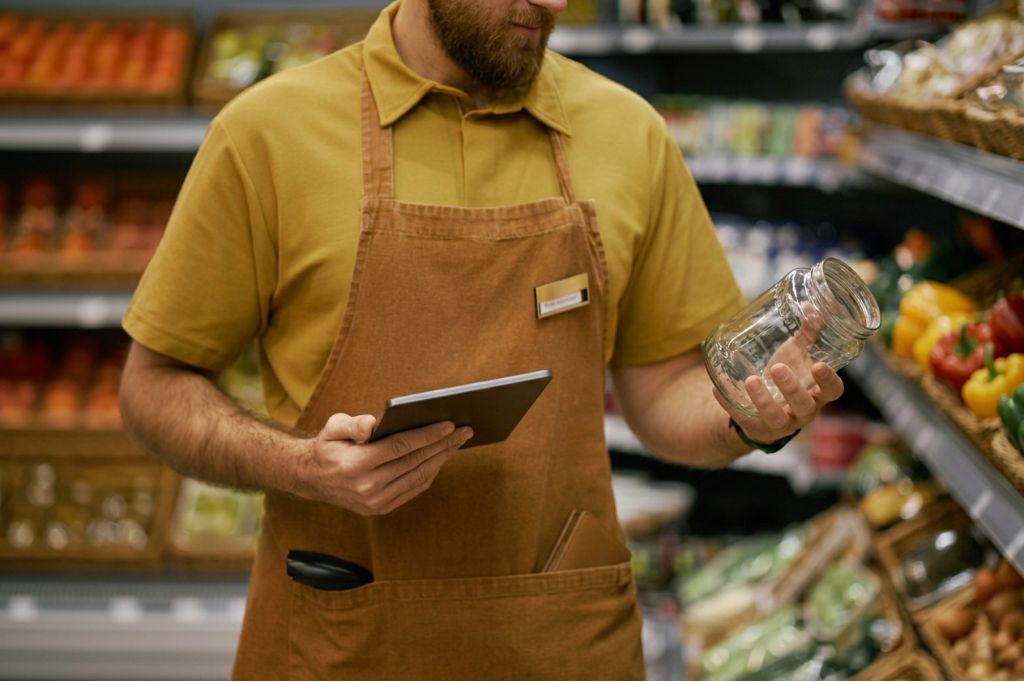
For a supermarket, switching to reuse is not simply a matter of installing a collection point; it is necessary to integrate the return of packaging into the daily organization of the store, from the checkout to the stockroom and the logistics dock.
Please allow space for returned packaging.
For professional logistics packaging, such as crates and bins, this bulk can be limited. They are generally designed to be nested or folded. once emptied, which greatly reduces the volume needed for their storage.
The situation is different for bottles and jars returned by consumers. They must retain their shape in order to be washed and reused.
Therefore, the more containers the store collects, the more it must adapt its storage capacity and the frequency of pickups.
Integrating new tasks into the teams' work
Recycling packaging also requires staff; even when a supermarket has a self-service machine, it requires regular intervention:
- Empty the collected containers
- Replace consumables
- Unlock the machine
- Clean the area
- Processing rejected packaging.
The success of the system therefore depends on the organization put in place according to the volume of packaging to be processed.
Organizing the return of packaging: hygiene and breakage
Some returned packaging may contain residues, be very dirty, or have been damaged during use.
However, the consumer does not have to perform industrial washing of the container before returning it. ADEME specifies that the cleaning necessary for reuse is carried out in a dedicated facility.A broken glass bottle, on the other hand, should not be reused and should be sent to glass recycling.These requirements follow the same logic as an approach QHSE, which structures the management of quality, hygiene and safety risks.
Financial monitoring of the deposit
A deposit is a sum collected and then refunded, which implies separate processing at the checkout. The information system must then allow for reconcile deposits collected, refunds issued, and packaging actually returned.This data allows us to monitor the operation of the system: return rate, volume of containers in circulation or number of packages temporarily remaining out of the loop.
What is the current status of the deployment of reuse in French supermarkets?
In 2026, reuse in French supermarkets is being tested on a large scale primarily in four regions of France. with the ReUse scheme in Brittany, Normandy, Pays-de-la-Loire and Hauts-de-France. Citeo indicates that more than 360 points of sale are participating., for 16 million consumers, around fifty brands and nearly 170 references.
After a year of experimentation, 518,000 returnable products were sold and 108,000 packages were returned., a average return rate of 24%with some stores reaching up to 60%. The experience is nevertheless well received by surveyed consumers, who give it an average rating of 8,6/10.

Why industrial washing influences reuse in large retail outlets
Without a washing center capable of absorbing the volumes and guaranteeing sanitary compliance, a container collected in a supermarket never returns to the shelf.
At ETERNITY SystemsThe treatment is organized into several stages:
- Collection of packaging from collection points or consolidation centers.
- Sorting and checking to separate the different references and discard containers that can no longer be reused.
- Repair, when the type of packaging allows it and the defect is correctable.
- Washing, disinfection and drying according to a suitable industrial process.
- Reconditioning and palletizing in accordance with the customer's specifications.
- Storage and then delivery of clean packaging to sites where it will be refilled.
The effectiveness of reuse depends on two complementary elements. The packaging must be strong enough to withstand numerous cycles, but it must also effectively return to the circuit and be able to be processed quickly.
The washing center thus constitutes the link that transforms a flow of used packaging into a stock of containers ready to be put back into circulation.
At ETERNITY SystemsIndustrial processes make it possible to reuse more than 70% of the water consumed and to reuse the same liter of water up to 300 times.
FAQ
Should you wash a returnable bottle before taking it back to the supermarket?
No, ADEME indicates that the washing is carried out by a dedicated industrial facility and that prior rinsing by the consumer is not necessary. However, it is recommended to return empty containers as soon as possible so that they can quickly re-enter the reuse loop.
What to do with a broken reusable bottle?
A broken bottle should not be returned to the point of sale. ADEME recommends placing it in the container, bin, or bag reserved for glass packaging. The container then enters the recycling stream, where the glass will be melted down to make new packaging.
At what point does reusable packaging become more environmentally friendly than disposable packaging?
ADEME sets this threshold at just a few uses, generally less than ten for a glass container. Beyond that, each additional rotation improves the environmental impact and reduces the unit cost of the packaging, since the initial investment is amortized over more cycles.
Is a supermarket obligated to take back reusable packaging?
Currently, there is no general obligation governing the take-back of reusable packaging by retailers. Participation in the ReUse scheme relies on the voluntary commitment of retailers. Zero Waste France is specifically calling on public authorities to regulate this take-back process in order to accelerate the adoption of reuse.

Anthony ADAM
Communications and Marketing Manager at ETERNITY Systems, Anthony designs strategies and content to promote more sustainable consumption. He is a committed agent of change who combines creativity, rigor, and action to strengthen the visibility and impact of projects related to reuse and the circular economy.
These articles might also interest you
A project to reuse packaging?
Our teams support you from diagnosis to industrial washing, in Europe and North America.
Contact us