
What is reuse?
Reuse involves giving products and materials a second life in order to reduce waste, extend product lifespan, and conserve natural resources. A key component of the circular economy, reuse plays a vital role in the responsible management of resources. How does reuse work? […]

Article summary
- Reuse in brief
- What is reuse?
- The three forms of industrial reuse
- What is the difference between reuse, repurposing and recycling?
- What are the legal provisions governing reuse?
- What are the benefits of reuse?
- How to implement reuse in business?
- ETERNITY Systems – An example of an industry serving reuse
Le reuse is about giving a second life to products and materials in order to reduce waste, extend the life of products and preserve natural resources. An essential component of the circular economy, reuse plays a vital role in the responsible management of resources.
How does reuse work and how can companies integrate it into their practices? At ETERNITY Systemswe washed more 7 billion reusable packages Since our inception. This practical guide summarizes our field experience to help you understand, evaluate and implement reuse in your organization.
Reuse in brief
- Reuse consists of giving new life to products by reusing them for their initial use,
- Reuse is distinguished from recycling, not requiring transformation major product,
- Reuse comes in three main forms: direct reuse, reuse after simple cleaning or a light revision, reuse of components.
- The The benefits of reuse are numerous : significant reduction of waste and exploitation of natural resources, optimization of business costs, generation of jobs in various sectors, etc.
What is reuse?
According to Article L541-1-1 of the Environmental Code, the definition of reuse corresponds to “ any operation by which substances, materials or products which are not waste are reused for the same purpose as that for which they were designed. »
Reuse is part of a waste prevention approach and circular economy, because it extends the life of products and reduces the amount of waste generated. Unlike recycling, which transforms the product into waste before reusing it, reuse has the advantage of maintaining the initial status of the product or material reused.
The three forms of industrial reuse
In practice, reuse can manifest itself in three different ways:
- Direct reuse : an object is used again for the same purpose for which it was designed.
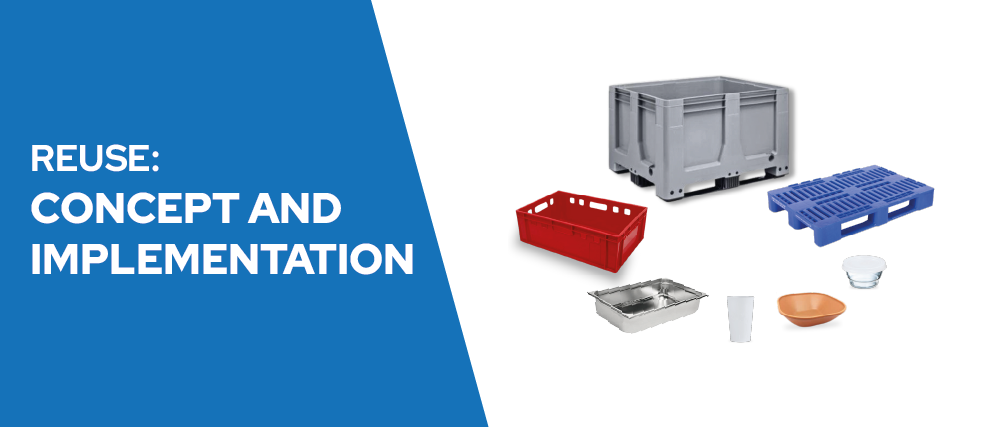
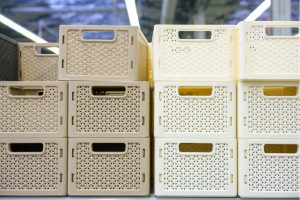
- Reuse after cleaning or overhaul : a light cleaning or a simple overhaul allows an object to be reused in its current condition. This is the core of the business at ETERNITY Systems, plastic crates from the agri-food industry can be reused after cleaning and quality control.
- Reuse of components : in some sectors such as construction, building components can be recovered during deconstruction and reused in new projects. For example, wooden beams, windows, etc.
1 liter of water processed in our factories is used on average 300 times — versus single use for conventional washing. We reuse more than 70% of the water consumed per cycle.
Key number
What is the difference between reuse, repurposing and recycling?
La main difference between reuse, repurposing and recycling is that a reused product is not considered waste and does not undergo any transformation, while a reused or recycled product is considered waste and undergoes a treatment or transformation process.
Key practices of the circular economy, each of these concepts has its specificities and advantages:
- Reuse : reuse of a product in its original state or after a light cleaning or simple revision. The product retains its status as a product, not becoming waste, and is used for the same purpose for which it was designed. Reuse is considered the most virtuous practice, because it allows the shelf life of products to be extended without major transformation.
- Reuse : " any operation by which substances, materials or products which have become waste are used again ". Reuse thus involves a waste treatment process, whereas reuse does not involve a transformation process. Reuse allows products to be given a second life while adapting them to current needs.
- Recycling : " any recovery operation by which waste, including organic waste, is reprocessed into substances, materials or products for the purposes of their original function or for other purposes”. Recycling therefore involves the transformation of materials of a product into a new product. The initial product is destroyed and its materials are reused to create something new (old clothes into new pieces). Recycling reduces the consumption of virgin raw materials, but requires industrial processes and energy.
In summary, Reuse is the most direct and ecological practice, followed by reuse and finally recycling. Each of these practices contributes to waste reduction and the preservation of natural resources, but at different levels of efficiency and environmental impact.
What are the legal provisions governing reuse?
Reuse is governed by several legal provisions: AGEC law, reuse clauses, and even European directives:
- AGEC law : the anti-waste law aims to accelerate the transition to a circular economy by reducing waste and promoting reuse and recycling.
- Re-employment clauses in public contracts : public buyers, such as government departments, local authorities and their groups, have an obligation to acquire goods resulting from reuse, repurposing or incorporating recycled materials. This obligation is defined by Article 58 of Law No. 2020-105 of February 10, 2020 relating to the fight against waste and the circular economy.
- La European directive 2008/98/EC : establishes the legislative framework for waste management within the European Union, and strongly encourages reuse as a priority in the waste hierarchy.
- PPWR file The European Packaging and Packaging Waste Regulation will be phased in starting in 2026. It will mandate reuse rates for each packaging category, particularly for transport and industrial packaging. Companies that plan their reuse strategy now will gain a significant competitive and regulatory advantage.
These legal provisions aim to create a framework favorable to reuse, by encouraging economic players to adopt more sustainable practices and by making producers responsible throughout the product life cycle.

Public buyers (state, local authorities, hospitals) have thelegal obligation since 2021 to integrate reused products into their marketsThis represents a direct commercial opportunity for companies that offer reusable packaging.
To remember
What are the benefits of reuse?
Reuse has many advantages, particularly on the environmental, economic and also social levels:
- Waste reduction : reuse helps reduce the amount of waste generated by extending the life of products. This contributes to reducing greenhouse gas emissions associated with waste management.
For example, in the catering or events sector, the use of reusable plates, cups and cutlery (made of glass, stainless steel or hard plastic) helps to limit the production of disposable tableware.
- Preservation of natural resources : reuse helps preserve natural resources by reusing existing materials. By avoiding the extraction of new raw materials, we reduce the environmental impact associated with the exploitation of natural resources.
- Financial savings : Reuse saves money by reducing the cost of purchasing new products. For example, many industries, including food, logistics and retail, use reusable plastic crates instead of continually purchasing single-use cardboard or plastic crates.
ETERNITY Systems facilitates this model by offering industrial washing services and revaluation of plastic crates, guaranteeing their cleanliness and compliance with health standards.
- Job creation : reuse contributes to the creation of jobs in the sectors of collection, sorting, repair and resale of second-hand products.
For example, ETERNITY Systems employs staff to collect used reusable packaging from companies, sort it according to its condition, then wash, inspect and repair it if necessary before putting it back into circulation. This process requires specific skills in maintenance, industrial hygiene and in logistics, thus creating many jobs.
- Awareness and education : Reuse raises awareness among individuals and businesses about the importance of preserving the environment and reducing waste. By adopting reuse practices, we contribute to collective awareness and a change in behavior in favor of sustainability.
1 liter of water is used ~300 times in our closed system. More than 70% of the water The consumed CO₂ is reused per cycle. The CO₂ savings avoided vary depending on the packaging and the distribution channel, but are consistently superior to a disposable packaging scheme.
Data ETERNITY
How to implement reuse in business?
The implementation of reuse in companies, in a circular economy logic, requires a structured approach and the involvement of all stakeholders in the organization. Here are the key steps to integrate reuse into company practices:
- Step 1 – Diagnosis : carry out a diagnosis of the resources available in the company. That is to say, identify the materials and equipment that can be reused.
- Step 2 - Action Plan : once the diagnosis has been made, an action plan must be developed to integrate reuse into the company's processes. This involves defining the objectives and actions to be implemented.
- Step 3 – Training : it is essential to raise awareness and train employees in reuse practices.
- Step 4 – Follow-up : it is important to set up monitoring of reuse actions to measure the progress made and adjust actions based on feedback. Performance indicators can be defined to assess the impact of reuse on waste reduction, savings made and preservation of natural resources.
ETERNITY Systems – An example of an industry serving reuse
ETERNITY Systems is a company specializing in washing reusable containers, offering concrete solutions to promote reuse within companies. It implements several initiatives to promote reuse and integrate this practice into the heart of its daily activities:
- Packaging recovery and reuse programs:
The company offers container recovery programs, such as crates, bins, buckets, pallets, boxes, gastronorm containers, cups, etc. These containers are collected, then subjected to an industrial washing process to guarantee optimal cleanliness, with QHSE standards demanding, in order to be able to reuse these containers. Thanks to an optimized method to consume as little water, detergents and energy as possible, we manage to reuse more than 70% of the water consumed and 1 liter of water can be used almost 300 times.
- Management and logistics for reuse
Beyond washing, ETERNITY Systems supports companies with logistics services and traceability tailored to their needs. This includes the reception, sorting and shipping of goods, the repair of packaging, storage or even transport and rerouting to companies. This not only facilitates, but also optimizes, the circulation of reusable containers in order to allow companies to maximize the efficiency of their operations while reducing their environmental impact.
- Innovation and sustainability in industrial washing
ETERNITY Systems stands out for its commitment to innovation and sustainability in the field of industrial washing. By optimizing cleaning processes and minimizing resource consumption, the company contributes to reducing waste and promoting a circular economy. This approach allows partner companies to benefit from an ecological and economical solution for the management of their reusable containers.
By integrating these practices, our company demonstrates that reuse can be an efficient and environmentally friendly solution, while supporting innovation and sustainability in various industrial sectors.
Take action now and find out our practical guide to set up the reuse of your industrial and commercial packaging.
In numbers





Anthony ADAM
Communications and Marketing Manager at ETERNITY Systems, Anthony designs strategies and content to promote more sustainable consumption. He is a committed agent of change who combines creativity, rigor, and action to strengthen the visibility and impact of projects related to reuse and the circular economy.
These articles might also interest you
Supermarket packaging: how does reuse work?
Sustainable packaging: the complete guide

A project to reuse packaging?
Our teams support you from diagnosis to industrial washing, in Europe and North America.
Contact us