Since your arrival

0

packaging has been washed by ETERNITY Systems

Returnable packaging: what does this reuse method consist of?

Un returnable packaging is packaging purchased with a security deposit so that it can be returned, reused, washed, and put back into circulation. Long reserved for glass bottles, the packaging deposit system is increasingly developing in France in other sectors such as catering and industry, in order to address the environmental challenges linked to the production of single-use packaging. 


How does the packaging deposit work and how does it fit into reuse? Operation, benefits, and implementation, ETERNITY Systems explains everything about returnable packaging. 


 The packaging deposit responds to different challenges: environmental, societal, economic


Returnable packaging in summary 

  • Un returnable packaging is a sustainable medium, recovered, washed and then put back into circulation. It helps reduce single-use packaging and associated waste.
  • Returnable packaging generally concerns glass bottles, but also jars, bottles, cups in the food, cosmetics and industrial sectors. 
  • Packaging deposit responds to environmental issues and societal, as well as regulatory with the AGEC law, which drives all actions circular economy.
  • To work, the deposit requires a reusable packaging, accessible return points, an efficient washing system and suitable accounting.

What is returnable packaging? 

Un returnable packaging is a reusable container for which the buyer pays a sum of money – the deposit – upon purchase. This amount is returned to the buyer once the packaging is returned, so that it can be washed, repackaged and reused. This incentive system encourages consumers to return their reusable containers instead of throwing them away.


Packaging deposit is therefore a method of reuse, which extends the life of packaging and helps reduce the environmental impact linked to the manufacture and disposal of disposable packaging.


Already well established in certain countries like Germany, where the return rate reached 98%, The packaging deposit system is currently developing in France, but still on a limited scale. However, with the AGEC law and regulations such as the PPWR file, the development of returnable packaging continues to advance, providing a concrete response to regulatory requirements and growing expectations in terms of sustainability. 

What are the returnable packaging options? 

It exists different types of packaging instructions : 

  • glass bottles, used for beer, wine or soft drinks,
  • steel drums for beer and gas bottles, which follow well-established deposit circuits,
  • reusable cups (ecocups), used in particular in bars or festivals, existing since the beginning of the 2000s in Europe,
  • glass jars,
  • cans of cleaning products,
  • cosmetic bottles.


Generally speaking, the deposit can be applied to almost any contents designed to last, as long as they are robust, washable, and suitable for multiple cycles of use.


 The deposit system for glass bottles is the most developed in Europe

Why deposit your packaging? 

The packaging instruction is registered as a concrete, efficient and measurable solution to develop our practices towards greater sustainability, on two notable levels: environmental and societal.

Benefits for the environment 

The consignment transforms the packaging into a reusable medium low environmental impact. Indeed, it significantly increases its lifespan and reduces the production of disposable plastic packaging which has a heavy impact on biodiversity. 


  • Contrary to popular belief, the washing of returnable packaging consumes less water than the manufacture of disposable packaging. 
  • A single reusable bottle can replace a large quantity of small disposable bottles, thus significantly reducing the waste generated and the production of greenhouse gases to treat this waste. Indeed, according to a Deroche study Since 2009, a 75cl returnable bottle has saved up to 60 single-use 25cl bottles from being thrown away.

A response to societal challenges 

In the face of growing concerns about plastic pollution and packaging waste, there is a strong expectation that brands will adopt more responsible practices


Indeed, a European study conducted by PA Consulting reveals that 80% of respondents believe we have a collective responsibility to reduce plastic use, and 57% are concerned about the amount of non-recyclable materials in takeaway packaging.


Packaging deposit therefore allows: 

  • Strengthening consumer confidence,
  • Promote the company's CSR approach,
  • Standing out in the face of increasingly stringent environmental demands.

What returnable packaging solutions already exist? 

In several European countries, such as Germany, the packaging deposit system is already well established, with return rates approaching 100%. In France, although the system exists, it remains marginal and limited to certain sectors or regions. 

However, the dynamics evolve : the AGEC law and the initiatives of committed industrial players encourage a generalization of this consignment model. 

The state of affairs in France: the desire to do better 

Packaging deposit systems are particularly widespread in professional sectors such as cafes, hotels and restaurants, where 30% to 40% of bottles are still washed and reused todayAs a result, according to the National Beverages Federation, 500.000 tonnes of waste per year are thus avoided. 

On the other hand, on a territorial scale, returnable packaging has almost disappeared, with the exception of Alsace and part of Moselle. Indeed, in these territories, certain mineral waters and beers are still sold in returnable bottles. 

Article 67 of the anti-waste law for a circular economy specifies, however, that the State must promote systems that reduce the use of single-use plastic, and that the deposit for reuse is to be favored as long as it presents a favorable environmental balance sheet.

The German example: a reference model 

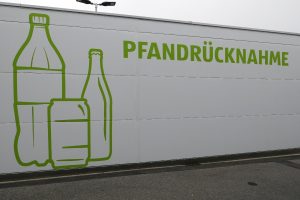
Germany is a model in packaging deposit, having a deposit system called PfandThis allows consumers to recover between 8 and 25 cents per bottle or can returned. Result according to the European Consumer Centre: 98,5% of containers are returned

By comparison, France only reaches 56% for plastic bottles and 43% for cans.

Germany is an example in the packaging deposit, with its Pfand system

What are the current obstacles to the deployment of packaging deposits in France? 

If the returnable packaging is a promising solution to limit waste, certain obstacles – more restrictive logistics or higher costs – work against its implementation in France.

Logistic constraints

Reusing packaging requires additional logistical steps : recovery, sorting, washing and recirculation of containers. For companies, these operations generate additional costs and require new investments and adjustments to the supply chain, which can hinder reuse efforts.


On the other hand, the success of a deposit system depends on the ease of use for the consumer. For this, it is essential to multiply the contribution points – supermarkets, local shops, etc. – to ensure efficient return of packaging. 


Large retailers are also playing a central role in the current experiment in France, notably through partnerships with brands like Danone, Refresco, and Lorina. These products now bear a purple banner encouraging customers to return the packaging in exchange for a refund.

Economic constraints

Today, part of the local authorities' income comes from the recovery of sorted waste, particularly plastic bottles. The implementation of a deposit system could divert these flows to other circuits (supermarkets, collection points), thus reducing the revenue associated with sorting.

Another constraining aspect is the fact that the exact amount of the deposit for reusable packaging has not yet been harmonizedHowever, a range of 20 to 30 cents per container is currently being put forward, an amount that should be sufficient to encourage returns, while remaining acceptable for consumers.

Packaging deposits represent certain current constraints for businesses

How to set up a packaging deposit system? 

To set up a deposit system, you need to think about the container, the logistics, the amount deposited and the accounting: 


  • The packaging must be designed to be reused : Returnable packaging must be sturdy, washable, and designed for multiple use cycles. It must withstand transportation and industrial washing. This applies, for example, to glass bottles, jars, flasks, or transport containers. Note that the packaging can be personalized, which allows brands to increase their visibility right through to the consumer.


  • Logistics must be clear : The success of a deposit system depends on its simplicity. The easier it is for consumers to find places to return their packaging, the more likely they are to do so. It is therefore essential to offer convenient collection points: stores, automatic deposit boxes, transit points, etc. Then, the packaging must be collected, sorted, cleaned, and put back into circulation. These operations can be internalized or entrusted to specialized service providers such as ETERNITY Systems who support washing, sorting and storage of packaging.


  • The deposit amount must be carefully considered : the deposit amount should encourage returns without discouraging purchases (often between 10 and 30 cents). It should be fully refunded upon return of the packaging, or converted into a credit note. Ideally, it should be set at a level slightly lower than the purchase price of new packaging, so as not to create a barrier for the customer and maximize the return rate.


  • Accounting must be adapted : returnable packaging is not sold, it is loaned against a temporary deposit. The company charges this deposit and agrees to reimburse it if the packaging is returned. This therefore requires clear accounting: it is necessary to distinguish the purchased product from the packaging, which remains the property of the supplier, and to track returns precisely.


By extending the life of containers, the packaging deposit responds to concrete environmental issues while adapting to new consumer expectations and regulatory changes. While its implementation requires a certain amount of organization regarding the choice of containers, return logistics and accounting management, the benefits are real : waste reduction, improved brand image, and compliance with sustainability policies.


With specialized partners such as ETERNITY Systems, companies now have all the means to integrate returnable packaging into their operations, without complicating their supply chain.


FAQ 

What is a deposit? 

The deposit is a system in which the customer pays an additional amount when purchasing a product, which is refunded when the empty packaging is returnedUnlike traditional recycling, the deposit system favors reuse, thus reducing waste production and environmental impacts.

Will packaging deposit become mandatory?

Nowadays, the deposit is not mandatory at the national level for all productsHowever, the AGEC law strongly encourages its development, particularly for reuse. Experiments are underway in France, and a generalization to certain types of packaging could see the light of day in the coming years.

Can returnable packaging be reused? 

Yes, that is precisely the purpose of the instruction: allow a package to be used multiple timesThe containers are designed to be strong, resistant to industrial washing, and suitable for multiple cycles. Each time they are returned, they are collected, cleaned, inspected, and then put back into circulation. This process avoids the need to manufacture new packaging for each use, thus reducing waste and CO₂ emissions.

CSR report: best practices for writing it

The CSR report, or Corporate Social Responsibility report, is the document presenting a company's actions and results over the year in environmental, social and ethical matters. Writing a good CSR report is important for companies, as it transparently demonstrates current sustainable development initiatives and future commitments, and helps them stand out from competitors. 

Do you want to know how to write a CSR report tailored to your business? ETERNITY Systems guides you in writing a complete and captivating CSR file. 

Writing a good CSR report requires time and good methodology Alt: Writing a good CSR report requires time and good methodology  


The CSR report in summary 

    • The CSR report is an annual document which presents the company's actions in social, environmental and societal matters. 
  • All companies can write a CSR report on their commitments, but this one is mandatory for those with more than 500 employees and €100 million in turnover.
  • CSR reporting must be clear, factual and adapted to the company's activity, with figures, concrete examples and monitoring indicators over time.
  • It strengthens the company's credibility, improves its internal practices, and meets the growing expectations of various stakeholders.
  • Writing a good CSR report involves: five steps : definition of CSR issues, data collection, content writing, validation, and dissemination.

What is a CSR report? 

The CSR report, or CSR reporting, is a document, often annual, in which a company publicly reports on its actions and its commitments in social, environmental and ethical mattersIt thus identifies and synthesizes the company's initiatives and results in terms of corporate social responsibility.

This roadmap demonstrates how a company integrates sustainable development issues into its operations and strategy. In practice, it presents the initiatives taken to: 

  • Reduce the ecological footprint, 
  • Improve working conditions, 
  • Strengthen business ethics, 
  • Support societal causes. 

Beyond its informative role, the CSR report allows you to set concrete objectives (reduction of emissions, parity, energy consumption) and monitoring indicators to strengthen its credibility, both internally and externally.

The CSR report summarizes the company's social, environmental and societal actions

Who is the CSR report aimed at? 

The CSR report written by a company addresses all of its stakeholders : its employees, its customers or consumers, its investors and business partners, its suppliers, and public institutions. 

  • The collaborators: For employees, the CSR report allows them to understand how the company acts concretely on collective issues such as equality, well-being at work, diversity and even safety.
  • Customers and consumers : the CSR report helps reassure customers or consumers about the commitments made by the brand in terms of social and environmental impact, by demonstrating a more responsible positioning. 
  • Investors and business partners : the CSR report allows the company to be evaluated beyond just financial results, based on various criteria: reduction of CO₂ emissions, diversity policy, ethical purchasing practices, etc.
  • Brands : the CSR file clarifies the company's requirements in terms of ethics, working conditions or respect for the environment, and can open the way to partnerships around more sustainable products or services.
  • The institutions: Local authorities and state agencies can consult CSR reports to monitor companies' territorial commitments.

Is the CSR report mandatory? 

In France, the CSR report is mandatory for companies of more than 500 employees with a turnover exceeding 100 million eurosFor SMEs or companies wishing to explain their CSR commitment, this report can be written voluntarily.

CSR reporting is published in the form of a Declaration of Extra-Financial Performance (DPEF). This DPEF is a regulatory requirement in force since 2017, resulting from the Grenelle II law of 2010. It requires large French companies to publish an extra-financial report detailing their environmental, social, and governance impacts. 

Evolution of the CSR report obligation

From 2025, this obligation will evolve with the gradual entry into application of the European CSRD directive (Corporate Sustainability Reporting Directive). The CSRD replaces the DPEF and considerably broadens the scope of companies concerned, by imposing extra-financial reporting on a greater number of structures, including SMEs of significant size:

  • large unlisted companies exceeding two of the following three thresholds: 250 employees, €40 million in turnover, €20 million in total balance sheet. 
  • Listed SMEs (from 2026). 

The CSRD directive also introduces several major developments in the content and form of extra-financial reporting:

  • Unified reporting standards : companies will have to follow the ESRS (European Sustainability Reporting Standards), developed by EFRAG, which define the indicators and content expected on environmental, social and governance issues.
  • The requirement of double materiality : the report must cover both the impact of the company's activities on society and the environment (impact materiality), and the impact of ESG issues on the company's performance and risks (financial materiality).
  • A standardized digital format : the reports must be published in a structured digital format (XHTML + XBRL markup), in order to facilitate the exploitation of the data by stakeholders and European authorities.

Although the CSR report is not mandatory for a large proportion of companies, it is a strategic tool often highly anticipated by stakeholders. Indeed, for these stakeholders, it allows them to assess the consistency between the values ​​displayed and the company's actual actions.

The CSR report is mandatory for companies with more than 500 employees and a turnover of 100 million euros.

What should CSR reporting contain? 

CSR reporting must have a clear and coherent structure to reflect the company's commitments in relation to its activities, which are structured around the 3 pillars of CSR: 

  • Social,
  • Societal,
  • Environmental. 

Each of these axes must be documented with concrete and measurable elements that demonstrate a long-term vision. 

The environmental pillar: measuring the impact and managing the transition

The report must detail the company's main sources of environmental impact, such as: 

  • Energy consumption: It concerns electricity, gas or fuel used on sites and for business trips. For example, at ETERNITY Systems, we have reduced electricity consumption on washing units, thanks to the gradual replacement of equipment with high energy efficiency machines.
  • Greenhouse gas emissions : they must be calculated from direct or indirect emissions linked to energy, and, if possible, other indirect emissions such as transport or the purchase of consumables.
  • Production and waste management: Waste management is a major issue for businesses. This area can, for example, include the implementation and recovery reusable packaging. This is an essential lever in an approach to REP EIC, which requires companies to better manage the end of life of their products.
  • The use of natural resources : refers to the consumption of water, raw materials or technical consumables.

In this environmental theme, the company is also expected to present the actions taken to limit its environmental footprint, such as: 

  • Energy sobriety approaches : concerns actions which aim to consume less without harming activity, for example, adjusting the heating of premises according to occupancy schedules. 
  • Eco-design : it involves rethinking products or services to reduce their carbon footprint over the entire life cycle. By thinking, for example, in a logic of reuse et circular economy.    
  • Low-carbon logistics : is based on the optimization of flows and the use of less emitting transport solutions.

The CSR report must explain how these commitments are made, in a concrete manner, with precise, quantified data compared over time.

The carbon footprint 

The carbon footprint allows the company to measure its greenhouse gas emissions. It indicates what sources have been taken into account (direct or indirect emissions), depending on what calculation method (for example the ADEME Carbon Base or the GHG Protocol), and on what period and what activities precise details of the company the analysis covers.

Carbon footprint results must be presented in a comparable manner from one year to the next, with trend graphs and, if possible, ratios per unit produced. These ratios allow emissions to be related to a unit relevant to the company's activity. For example, the number of services performed, the surface area cleaned, or turnover.

The carbon footprint is also a tool for making better decisions, helping to: 

  • Identify where energy consumption can be reduced,
  • Review certain ways of working,
  • Mobilize teams around common goals.

The carbon footprint allows the company to measure its greenhouse gas emissions

The social pillar: promoting the company's human policy

The social part of the CSR report concerns the company's actions for the well-being of its employees: working conditions, safety, health, training, etc. This company reporting must therefore contain concrete elements on:

  • Quality of life at work : represents the measures put in place to promote a balance between professional and personal life, for example, or to reduce the arduousness of work. 
  • Career management: The CSR report can present integration paths, development interviews or even internal mobility. 
  • Training: It is about demonstrating how training supports the development of skills and the improvement of performance.
  • Occupational risk prevention : represents the actions and figures for reducing work accidents.
  • Diversity of profiles and equal opportunities : the file must document the representation of women, young people, seniors, people with disabilities, as well as the distribution of the payroll, and detail the actions taken to promote inclusion.

By making the efforts made to benefit employees visible, the company gives meaning to collective action and strengthens its employer brand. 

The societal pillar: asserting its role within the territory and society

The societal aspect of CSR reporting shows how the company is involved in its territory and interacts with its local environment: partners, associations, communities, etc. This includes:

    • Responsible purchasing policies (contractual conditions, choice of suppliers, social and environmental criteria), 
    • Associative or institutional partnerships
    • Commitments to professional integration or the local economy, 
  • Contributions to causes of general interest.

This part of the CSR report serves to show that the company seeks to have a positive impact on society, for example, by supporting local employment, establishing useful partnerships or carrying out solidarity actions.

The CSR report must reflect the actions and commitments of the company's activities

CSR report: what are the benefits for businesses?

Beyond regulatory obligations, writing a CSR report offers several advantages to the company, allowing it to: 

  • Structure your strategy,
  • Improve your practices,
  • Gain credibility,
  • Building trust with stakeholders.

At the internal level, This assessment allows us to take stock of the actions undertaken, to generate ideas, to identify areas for improvement, and to better manage the CSR strategy. To achieve this, it mobilizes teams across the board around common objectives and values ​​their involvement in the initiatives undertaken.

At the external level, the CSR file becomes a strong communication tool that strengthens the company's image by showing its commitments. It helps create a climate of trust with customers, partners, investors or communities. 

What steps should be followed to write a CSR report? 

To write a relevant and well-structured CSR report, you must follow 5 key steps: 

    • Identify priority issues,
  • Collect useful data,
  • Organize and write content,
  • Validate the document with management,
  • Ensure its dissemination.

Each of these steps contributes to making the corporate CSR report a real management and communication tool. 

  1. Define the company's CSR issues

Before writing its report, the company must first identify important topics linked to its activity, on which it has a real impact (energy, waste, working conditions, etc.) and which must be at the center of the report.

To do this, it is necessary to cross-reference the expectations of stakeholders (customers, employees, suppliers, etc.) with what is truly significant for the company. This makes it possible to distinguish between central issues (such as workplace safety or carbon impact) of secondary issues (such as sorting office waste or reducing paper use), to avoid the report being too general.  

2. Collect data and structure information

Once the issues have been identified, it is necessary to collect figures and information that illustrate the actions taken, the results obtained, and the areas for improvement. This step involves numerous departments (HR, QHSE, exploitation, finance, communication, etc.). The data must be reliable, sourced, and cover the three main aspects of CSR: environment, social and societal. 

This is also the stage where it is necessary structure the report plan and organize content by theme. 

3. Write clear, transparent and easy-to-read content

The CSR report must be written in a simple, factual and rigorous mannerThis is not a marketing tool. The tone should be factual, transparent, and avoid any promotional language. It is important to highlight the progress and advances made, without hiding the difficulties or the actions that are still incomplete. 

A practical layout, concrete examples, graphics, or testimonials can help bring the content to life. The goal is for everyone reading the CSR report to understand where the company is and where it wants to go.

4. Validate and involve management

The CSR report commits the company publicly. It is therefore essential that it be validated at the highest hierarchical levelDepending on the size of the structure, this may involve general management, members of the executive committee, the CSR manager, or even representatives of the CSE or the board of directors. 

This validation ensures that the content is aligned with the overall strategy, that it complies with legal obligations (in the event of a DPEF or external verification), and that it can be distributed with complete transparency. 

5. Disseminate and use the report

Once written and validated, the report must be subject to a magazine and be disseminated to different audiences: employees, clients, partners, institutions, general public. 

It can be published on the company website, relayed on social networks or presented at internal events. It can also be the subject of a shorter summary or an interactive format to facilitate reading.

There are 5 key steps to follow to write a complete and relevant CSR report

What tools should be used to produce the CSR report?

Some collaboration, data exchange, or formatting tools make it easier to write the CSR report. To organize collaboration and distribute tasks, tools like Notion or Trello are effective. To centralize and structure data, shared spreadsheets may be sufficient, but specialized solutions such as Tennaxia, Reporting 21 or Enablon are more suitable for multi-site or high-data-volume businesses.  

What are the common mistakes in a CSR report? 

Certain errors frequently appear in CSR reports and can harm their visibility and credibility. These include organizational errors, inflated results, or a lack of specificity: 

  • Lack of data organization : one of the first mistakes is the accumulation of data in a document without hierarchy or analysis. The data indicated, whether quantified or not, must be explained, compared and show changes over time. 
  • Overestimating the results : adopting a slightly overly promotional tone and inflating the results are fairly common mistakes. For a CSR report, it is essential to be transparent and reflect reality, otherwise you risk being accused of greenwashing. 
  • Lack of specificity : a good report should not be too generic, it should reflect the specificities of the activity, the territory, the challenges of the sector and the commitments specific to the company.

Example of CSR report: ETERNITY Systems

ETERNITY Systems details its CSR strategy in a report structured around 3 pillars: environmental, social and societal. It is through a clear, visual and thematic presentation that the company promotes and concretizes its social responsibility initiatives

A report aligned with the company's identity 

At ETERNITY Systems, the identity has always been based on reuse, sustainability and the circular economy. The CSR report directly translates these values ​​by highlighting actions linked to the core business: 

  • Reduction of energy consumption
  • Optimizing the life cycle of packaging 
  • Partnerships around reuse

The CSR report must faithfully reflect the company's mission, formalize its actions, while providing concrete evidence of its impact and commitments. The CEO's message illustrates this consistency by recalling the importance of reuse, local roots, sustainability while maintaining a balance with economic performance. 

A strategic and operational report 

The CSR report plays a triple role: 

  • Structure the CSR approach at the company level by setting measurable future objectives. For example, the objective of reducing energy consumption at French sites by 30% and obtaining green energy certificates by 2025 are concrete actions to highlight. 
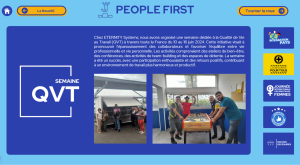
  • Mobilize employees and stakeholders around concrete initiatives. For example, the week dedicated to quality of life at work unites teams and promotes links between departments. 
  • Communicate in a clear, authentic and distinctive way about the company's identity and commitments. For example, through its partnership with Buddie-pack and the publication of a white paper on the reuse of industrial packaging, ETERNITY Systems asserts its position as a leader committed to the circular economy. 

A report with results to engage and convince 

The CSR report is also a trust tool with all partners because it provides data, monitoring indicators and concrete examples which help to build the trust of stakeholders and convince them of the relevance of the approach.

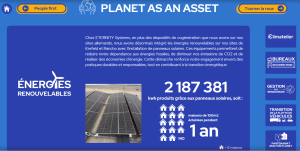
For example, the production of 2 kWh of solar electricity at two industrial sites (Rancho, USA and Krefeld, Germany) is translated into a speaking equivalent: 187 houses of 381 m² powered for one year. This type of numerical indicator makes the impact concrete, facilitates understanding and reinforces the credibility of the report.

Consult the CSR report ofETERNITY Systems by clicking on the button below:

I am reading the CSR report

FAQ – Frequently asked questions about the CSR report 

Where can I find company CSR reports? 

CSR reports are generally available online on the company's websiteFor listed companies or those subject to legal obligations, they can also be consulted on official platforms such as the AMF (Financial Markets Authority) website, the National Register of GHG Emissions or the INPI website.

Who prepares CSR reports? 

The drafting of the CSR report is most often prepared by the CSR managerHe works in collaboration with several internal departments such as human resources, quality (QHSE), legal, general management and communication, in order to collect data, structure the content and ensure the overall consistency of the report.

How long does it take to write a CSR report? 

Writing a CSR report takes between 1 and 3 months on average depending on company size, CSR experience and data availability. 

What standards should be followed for the CSR report? 

The most used are ISO 26000 standard (corporate responsibility), the GRI standard (Global Reporting Initiative), the ESRS framework (from the CSRD directive), or the ADEME recommendations for carbon footprints.

PPWR: New requirements for European packaging regulations in 2026

Coming into force in February 2025, the regulation PPWR file (Packaging and Packaging Waste Regulation) completely redefines the European framework around packaging and packaging waste, and marks a major step forward for the industry and the entire European internal market.

When it comes into force on 12 August 2026, all businesses in every Member State will have to comply with stricter requirements on waste reduction, reuse and traceability. Do you want to anticipate the changes in this new regulation now? ETERNITY Systems helps you understand the concrete impacts of the PPWR, its implementation, the measures to anticipate and the key deadlines.


The European PPWR regulation in summary

  • Le PPWR file (EU 2025/40) is a new European Union regulation on packaging and packaging waste.
  • It was adopted in January 2025 and will apply from August 12, 2026 in all Member States, without national transposition.
  • The objectives of the PPWR are: waste reduction, improved recyclability, development of reuse and harmonisation of rules across the EU.
  • All sectors and all types of packaging are concerned.

PPWR is a European regulation for packaging and packaging waste

What is PPWR?

The PPWR, or "packaging and packaging waste regulation", is a European text which aims to harmonize the packaging obligations of Member States, manufacturers and marketers. The PPWR applies uniformly in all Member States, without the need for national transposition.

Replacing European Directive 94/62/EC, which has been in force for over 25 years, the PPWR regulation is part of the European Green Deal strategy. Like the AGEC law, it aims to reduce the environmental impact of packaging, to accelerate the transition towards a circular economy, and to better inform consumers about the management of their waste.

Following its predecessor, it imposes strict rules on sustainable design, labeling, traceability, reuse, and prohibits certain single-use packaging formats deemed unnecessary or non-recyclable.

The PPWR Act targets all types of packaging : food, industrial, e-commerce, logistics, etc. Its implementation also has a significant impact on many sectors: manufacturers, importers, distributors, e-retailers or logisticians. These will have to adapt their packaging, their organization and their logistics flows.

PPWR aims to transform how packaging is designed, used and processed

What are the main objectives of PPWR?

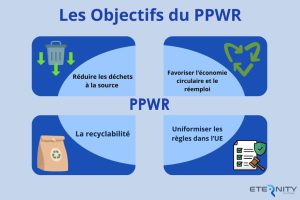
The PPWR Regulation sets specific and measurable targets to transform the way packaging is designed, used and handled across EU states:

  • Reducing waste at source,
  • Recyclable packaging requirement,
  • Promoting the circular economy and reuse,
  • Standardization of rules at European level.

Reduce waste at the source

The first objective of the PPWR is to reduce the amount of packaging placed on the market, by limiting over-packaging, non-recyclable formats and single-use packaging without justification. Indeed, according to the European Commission, 40% of plastics used in the EU are packaging, and each European generates an average of 190 kg of packaging waste per year.

Therefore, the regulation sets measurable objectives for reducing packaging:

  • -5% by 2030;
  • -10% by 2035;
  • -15% by 2040.

Make all packaging recyclable by 2030

From 2030, all packaging placed on the market must be recyclable, according to precise technical criteria. The PPWR introduces a recyclability classification system (from A to E), where only packaging rated at least “C” will be authorized. This requirement aims to guarantee their compatibility with existing sorting and recycling infrastructures.

Promoting the circular economy and reuse

The PPWR aims to impose a circular approach to packaging at all stages of the life cycle. This means keeping materials in the economic cycle for as long as possible, while reducing dependence on virgin materials. This goal is achieved by:

  • reuse obligations on specific product categories (drinks, e-commerce, catering),
  • recyclability requirements,
  • The establishment of a harmonized deposit system for certain product families, such as plastic bottles and aluminum cans for beverages.

Standardize rules across Europe

Today, packaging regulations vary from country to country. The PPWR aims to create a common foundation with complete harmonization of national legislation:

  • standardized design rules,
  • Un unified labeling on recyclability, composition or reuse,
  • precise definitions (such as “reusable packaging”) shared across the EU.

This standardization will facilitate trade, reduce regulatory barriers and strengthen the competitiveness of European sectors.

Who is affected by the PPWR law?

The PPWR applies to all companies that place packaging on the market in Europe, regardless of their sector or size. It concerns producers, distributors, importers and end users, with a view to extended producer responsibility (REP). These companies will therefore have to comply with it from August 12, 2026.

The sectors most impacted by the PPWR law are e-commerce, mass distribution, catering and takeaway, which will have to adapt their packaging, offer reusable containers or integrate deposit systems. Importers will also have to comply with these rules with packaging coming from abroad.

Beyond manufacturers, the PPWR affects all supply chains. The regulation imposes new practices for packaging management, sorting, washing, and traceability. To support this transition, our solutions ETERNITY Systems become essential to guarantee large-scale reuse objectives.

Companies that fail to comply with PPWR obligations are exposed to administrative and financial sanctions, defined by each Member State. This may include fines, marketing bans or withdrawals of non-compliant products. Traceability and proof of compliance will be systematically required.

The PPWR measures are applicable to all packaging marketed in the EU

What are the main PPWR measures from 2026?

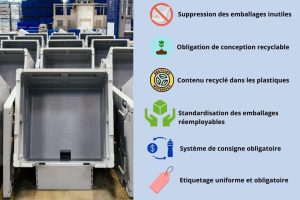
In order to limit the increase in packaging materials (+20% between 2011 and 2022 according to a Eurostat study “Packaging waste statistics”), the PPWR regulation introduces rules applicable to all packaging marketed in the European Union, such as: the elimination of unnecessary packaging, the obligation of recyclable design, the standardization of reusable packaging, or mandatory uniform labeling.

Elimination of unnecessary packaging

The PPWR text gradually bans packaging deemed excessive, such as double-bottom overwraps, boxes within boxes, individual mini-portions, or multi-layer plastic packaging that is difficult to recycle. For fruits and vegetables, single-use plastic packaging will be banned if the product can be sold in bulk. This abolition also applies to all purely marketing formats, which generate volume without functional added value.

Recyclable design obligation

From 2030, all packaging must be designed to be recyclable, that is, technically sortable, made of materials compatible with existing recycling channels, and free from disruptive elements (such as non-separable inks or composite plastics). This measure concerns the shape, the materials used and their compatibility with existing recycling channels.

By 2035, these packages will have to be recyclable.in large scale”, or recycled concretely in at least 75% of European territory.

Mandatory recycled content in plastics

The PPWR regulation imposes minimum rates of recycled materials in plastic packaging :

  • 10% to 35% recycled plastic by 2030,
  • Up to 65% in 2040.

These thresholds aim to stimulate demand for quality recycled materials and strengthen the circular economy.

Standardization of reusable packaging

The PPWR harmonizes reusable packaging formats for supply chains (bins, crates, pallets, etc.), facilitating their use between European players. Reuse is becoming an obligation for certain sectors:

  • 10% of packaging reused in 2030 for drinks,
  • 40% in 2040.

The takeaway, catering and e-commerce sectors will therefore have to offer refill or return systems.

ETERNITY Systems already supports many companies in this transformation thanks to its industrial washing solutions reusable containers, to integrate reuse into the life of the product in compliance with the PPWR.

Our infrastructure closes the logistics loop: collection, washing, quality control, and recirculation of reusable packaging. We offer a turnkey approach to integrating reuse into your value chain, in full compliance with the PPWR.

Mandatory deposit systems

Plastic bottles and cans will be subject to a mandatory deposit by 2029, unless countries already achieve a collection rate above 80% in 2026. These deposit systems will be harmonized across Europe to facilitate their use by consumers.

Uniform and mandatory labeling

From 2028, all packaging will have to bear common pictograms throughout the EU to facilitate sorting at source. This labeling will also indicate whether the packaging is reusable, returnable, or made from recycled materials. The objective of this measure is twofold: to improve consumer understanding and increase sorting performance.

Specific rules for e-commerce

E-commerce packaging will be subject to strict rules for minimizing voids and reducing volumes. Shippers should avoid oversized packaging, multiple layers and unnecessary cushioning.

Supervision of problematic substances

per- and polyfluoroalkyl substances (PFAS), often used to waterproof food packaging, will be prohibited beyond a defined thresholdThis measure aims to reduce exposure to compounds recognized as eternal pollutants.

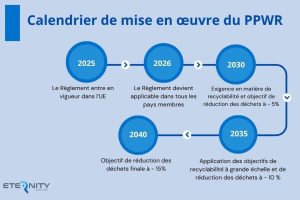
 The PPWR entered into force in 2025 and its application to all Member States is by 2026.

The timeline of PPWR application

The PPWR regulation officially entered into force on February 11, 2025. Its application date in all European Union Member States is set for August 12, 2026. This 18-month period gives companies a much-needed transition period to adapt their packaging, rethink their logistics circuits and anticipate future regulatory requirements.

Here are the key steps to remember to effectively prepare for the PPWR

2026: mandatory application in all Member States

  • 12th August 2026 : the regulation becomes applicable throughout the European Union.

The first obligations are imposed: elimination of prohibited packaging formats, start of harmonized labeling, first controls.

2027 to 2029: secondary legislation and technical clarifications

  • February 2027 : publication of calculation methods for selective collection and minimization standards.
  • February 2028 : evaluation of bio-sourced raw materials.
  • 2029 : progressive adjustments of technical obligations, according to packaging categories.

2030: 100% recyclable objective

  • All packaging placed on the market must be recyclable, with a minimum performance level (grade C).
  • Entry into force of the first reduction targets: -5% of packaging waste compared to 2018.
  • Implementation of mandatory recycled content rates for plastic packaging.

2035: “Large-scale” recyclability

  • Packaging will not only have to be designed to be recycled, but actually recycled on an industrial scale in existing sectors.
  • Reinforced reduction target: -10% packaging waste compared to 2018.

2040: final stage: more recycled content and more reuse

  • Final reduction target: -15% of packaging waste, still based on 2018.
  • Strengthening requirements for traceability, logistics performance and life cycle assessment.

EGALIM Collective Catering Law: issues, application and new developments

The EGALIM law, which came into effect in 2018, aims to promote healthy, sustainable, and equitable food, particularly in the catering sector. The law sets clear objectives around sustainable food, reducing plastic, and combating waste by requiring public and private sector stakeholders to transition to more virtuous practices. 

For local authorities, this means rethinking procurement, service delivery, and waste management. How can the EGIM law be effectively implemented without increasing the constraints on collective catering? Definition, challenges, implementation, ETERNITY Systems explains everything you need to know for more responsible collective catering. 

the EGALIM law promotes healthy, sustainable and fair food in collective catering


The EGALIM law in summary 

  • The EGALIM law was adopted in 2018 following the General Food Conference, aimed at improving food, protecting the environment and supporting producers.
  • It applies to all collective catering structures (schools, hospitals, nursing homes, businesses, administrations, etc.) serving more than 200 meals per day.
  • For collective catering, at least 50% of the products served must be sustainable or labeled, including 20% ​​from organic farming (with a higher threshold for meat/fish since 2024).
  • A weekly vegetarian menu is mandatory in school canteens, in order to diversify protein intake and reduce environmental impact.
  • The gradual ban on single-use plastics requires all establishments to switch to reusable containers by 2025.
  • The fight against food waste is becoming an obligation, with diagnosis, concrete measures, and recovery of surpluses through donations.
  • Users must be informed in a clear and legible manner about the origin and quality of the products served, including vegetarian options and sustainable commitments.
  • Lotting is recommended to structure calls for tender by product type and favor local or specialized suppliers.
  • The Ma Cantine platform helps establishments monitor their EGALIM compliance through self-diagnostic tools, practical resources and a remote reporting system.
  • Partners like ETERNITY Systems, with washing and logistics solutions for reusable containers (via the Re-uz for Eternity alliance), facilitate the transition to sustainable and legally compliant collective catering.


What is the EGALIM law for collective catering? 

The EGALIM law for “The Balance of Commercial Relations in the Agricultural and Food Sector and Healthy, Sustainable and Accessible Food for All”, is a French law adopted on October 30, 2018 following the General Food Conference (EGA) organized in 2017 by the government. 

The EGALIM law was created to address several issues:

  • The precariousness of agricultural income : many French farmers do not make a decent living from their work.
  • Food quality : consumers expect more transparency, sustainability and proximity in their food.
  • The environmental impact of the food system : food waste, use of single-use plastics, dependence on imported products, etc.


The EGALIM law for collective catering then sets objectives around a societal and environmental pillar which consists of: 

  • Improving the diet of the French
  • Fight against waste
  • Reduce the use of plastic
  • Promoting sustainable practices in public canteens.

the EGALIM law for collective catering is based on a social and environmental pillar

Who is the agriculture and food law for collective catering aimed at? 

The law applies to all public or private collective catering structures serving more than 200 meals per day: 

  • School canteens and catering, 
  • healthcare establishments (hospitals, nursing homes, clinics), 
  • company restaurants, 
  • social and medico-social establishments (reception centers),
  • public administrations (communities, ministries, penitentiary establishments) 

Catering managers have a legal obligation to comply with the law's objectives, particularly in terms of percentages of sustainable products, vegetarian options, and the gradual elimination of plastic. In the event of non-compliance, sanctions may be imposed, and audits may be conducted to verify compliance.

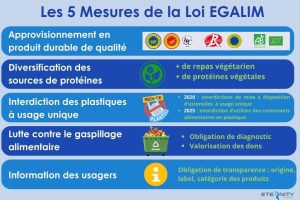
What are the 5 measures of the EGALIM law for collective catering? 

The EGALIM law is based on five major axes that contribute to changing food practices towards greater sustainability, responsibility, and transparency. These measures concern both: 

  • Supplies
  • Service practices
  • User awareness 
  • Waste Management

Sourcing sustainable and quality products

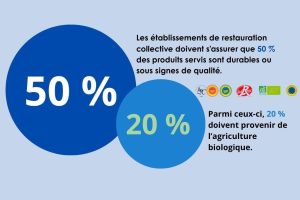
Since January 1, 2022, catering establishments subject to the EGALIM law must ensure that at least 50% of the products served are sustainable or carry quality labels. Of these, 20% must come from organic farming. The following are considered quality products: 

  • Products under official quality and origin labels (SIQO): for example, foods with labels such as Label Rouge, AOP, AOC, IGP 
  • Products with the sustainable fishing ecolabel
  • Organic and fair trade products
  • Products with the RUP logo, which aims to promote products from the outermost regions of the European Union

In 2024, this requirement has been further strengthened, particularly in the meat and fish sector, where 60% of purchases must now be sustainable products.

In this context, buyers in the catering sector are at the heart of the process of rethinking their selection criteria and favoring local producers and establishing fairer relationships with suppliers. A national guide was designed to offer concrete ideas in terms of purchasing strategy and techniques.

 50% of the products served are sustainable, of which 20% must come from organic farming

Diversification of protein sources and vegetarian menus

As part of the food transition, the EGALIM law also requires the introduction of a vegetarian menu at least once a week in school canteens. This measure meets several objectives: 

  • Reduce overconsumption of meat
  • Limiting the environmental impact of animal production
  • Promote a more varied diet.

Beyond a simple meat-free dish, the vegetarian menu must be nutritionally balanced by integrating alternative sources of protein such as legumes, eggs, whole grains or even dairy products. 

3 billion meals are served per year in collective catering in more than 80 restaurants. And according to an INRAE ​​survey on legumes conducted in 2019 among chefs and managers of collective catering, 87% want a greater diversity of legumes which are very good vegetable proteins. 

This development therefore requires catering teams to adapt their recipes and cooking techniques and to train their staff in new dietary balances.

Ban on single-use plastics

According to the European Parliament, the volume of plastic packaging waste generated per capita increased by around 29% (+8,1 kilos per person) between 2010 and 2021.

And it is in this context that one of the essential measures of the EGALIM law for collective catering concerns the gradual elimination of plastic in catering services: 

  • Since 2020, the use of plastic food containers has been banned for preparing, heating, and serving meals for children under 6 years old. And from January 1, 2025, this ban will extend to all mass catering establishments.
  • Since 2021, the ban on the provision of single-use plastic utensils, whether for payment or free of charge. 
  • Since 2022, collective catering has been required to use reusable containers for home delivery services.
  • From the 1er January 2025, reusable containers or those made from recyclable materials will be required for takeaway sales. 

This structural change requires the adoption of reusable containers, such as stainless steel bins or reusable jars. But it also means implementing reliable collection, washing, and traceability solutions. This is where specialized service providers such as ETERNITY Systems, capable of guaranteeing a industrial washing of reusable containers conforms to strictest hygiene standards.

The fight against food waste and food donations

According to ADEME, the consumption phase alone, food waste represents 30 kg per year per person in their household. 

Faced with this major challenge, the EGALIM law now requires collective catering establishments to carry out a precise diagnosis and take concrete actions to reduce waste. They must: 

  • Measure the quantities thrown away, 
  • Educate guests about the right portion
  • Implement suitable solutions to limit losses, such as recycling leftovers into other preparations

The EGALIM law strongly encourages the recovery of food surpluses through donations, particularly to recognized associations such as the Restos du Cœur and the Red Cross. This dynamic requires rigorous organization: 

  • Identify products that are still consumable but not served
  • Store products temporarily in good conditions
  • Organize their removal within timeframes compatible with health safety.
  • Team training

User information

The EGALIM law imposes a duty of transparency on diners. Users must be informed in a visible and legible manner about the quality of the products served: their origin, label, category (sustainable, organic, local, etc.). This information also concerns vegetarian options, the establishment's commitments to combating waste, and waste management.

This educational approach aims to develop a more conscious and responsible diet. It also encourages establishments to adopt clear, structured communication that is accessible to all audiences, including younger people and people with disabilities.

The EGALIM law aims to improve food, fight against waste, and reduce plastic.

How to achieve the objectives of the EGALIM law for collective catering? 

To effectively implement the requirements of the EGALIM law, collective catering establishments must not only: 

  • Adapt their purchasing practices
  • Adapt their internal organization and their monitoring tools 
  • Adapt their relationships with suppliers. 

Allotment: a strategic tool for quality 

Allotment involves dividing a public market into separate lots, usually by product type (fruit and vegetables, meat, dairy, bread, etc.). This method allows for the use of smaller, more specialized suppliers, such as local producers or artisans.

By reducing barriers to entry for small agricultural or craft businesses, allotment promotes diversity of supplies, product quality and the development of local sectors.

Train teams and build lasting partnerships 

It is essential that collective catering staff (cooks, managers, service agents) understand the issues of the EGALIM law in order to be able to adapt their practices:

  • Developing balanced vegetarian menus
  • Integrate new labeled products into recipes
  • Manage reusable containers

The success of the regulatory transition for mass catering also requires regular dialogue with suppliers, whether industrial or locally sourced. Establishments can clarify their expectations: desired product types (labels, origin, weights), delivery conditions, supply frequency, but also requirements related to the EGALIM law, such as the absence of single-use plastic in packaging.

It is in this logic thatETERNITY Systems intervenes as a partner by supporting communities in the implementation of reusable containers for collective catering. ETERNITY allows catering companies to comply with the ban on single-use plastic, while maintaining smooth and secure logistics. 


How does ETERNITY Systems helps you meet the objectives of the EGALIM law?

Among the major challenges posed by the EGALIM law is the gradual ban on single-use plastics in collective catering, with a deadline set for all establishments of 2025. This measure notably involves replacing disposable tableware with sustainable containers, while ensuring strict hygiene conditions with controlled logistics and good traceability.

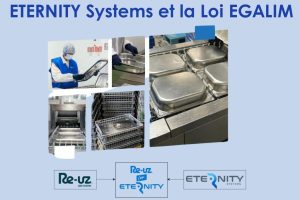
It is on these issues that intervenes ETERNITY Systems, as a partner of collective catering establishments by offering, in partnership with Re-uz, complete support, from the provision of reusable containers to the logistics flow management through industrial washing.

to get out of plastic ETERNITY Systems and Re-uz offer concrete solutions


Ma Cantine Platform: an essential tool for the EGALIM law for collective catering

To support establishments in the practical implementation of the EGALIM law, the Ministry of Agriculture has launched the Ma Cantine platform, a free digital tool, specially designed to support those involved in collective catering. 

My Canteen offers: 

  • Educational resources such as practical guides, memo sheets and even vegetarian menu recipe advice 
  • A self-diagnostic tool that allows establishments to assess their level of compliance with the EGALIM law: organic rate, frequency of vegetarian menus, use of plastic, etc. This helps identify priority actions to be taken. 
  • An indicator tracking system to monitor purchasing data via a remote reporting system

It is therefore a platform that makes it possible to make the efforts made visible, to identify the levers that can still be activated, and to mobilize teams around common and measurable objectives.

The EGALIM law for collective catering in 2025: Assessment and prospects 

Halfway through its implementation, the EGALIM 2 law, supplemented by the Climate and Resilience law, shows mixed results in the collective catering sector. Indeed, the quantified objectives set by the law have not yet been fully achieved. The main difficulties concern: 

  • Compliance with the threshold of 20% of organic products, particularly in rural areas or areas with a low production base;
  • The ban on single-use plastic containers, which requires significant logistical investments to move to reuse ;
  • The complexity of public procurement, which hinders access to calls for tender for small local producers, despite incentives for allocation.

Despite these obstacles, the outlook for 2025 also shows an acceleration of efforts:

  • The development of team skills, particularly through training, pooling between communities and tools such as the Ma Cantine platform;
  • The rise of reuse, with solutions like those proposed by ETERNITY Systems and its partnership with Re-uz, which provides a concrete response to the ban on plastic in restaurants 
  • The development of new local sectors, in conjunction with agricultural cooperatives and regional purchasing groups.


Companies like ETERNITY Systems are part of this dynamic, by offering operational solutions that allow canteens and collective restaurants to effectively meet regulatory requirements while modernizing their operations.

How ETERNITY Systems revolutionizes industrial performance in the service of the circular economy

Exclusive interview with Sophie Trentesaux, Business Development Manager at ETERNITY Systems – By Grand Paris Sud

In an article published by Greater Paris South, our Business Development Manager, Sophie Trentesaux, returns to our central mission: to make reuse a reliable, sustainable and local industrial solution serving a circular industrial economy.

Industrializing reuse: a strategic challenge

For more than 25 years, ETERNITY Systems develops solutions for washing reusable containers for the food, cosmetics, logistics, health, etc. sectors. Thanks to 18 sites spread across 6 countries, we are setting up a circular logistics proximity to maximize sustainability while ensuring impeccable hygiene standards.

“We support manufacturers in their transition to reuse by providing them with a reliable, efficient and resource-efficient infrastructure.”explain Sophie Trentesaux.

💧 Green technology at the heart of our DNA

Our washing system is designed to combine industrial efficiency and environmental sobriety :

  • Reuse water up to 300 times

  • Internal wastewater treatment plants

  • On-site power generation (CHP)

  • Integrated container traceability

A winning synergy with Re-uz

Grand Paris Sud also highlights our strategic partnership with Re-uz, a company specializing in the deposit and design of reusable/reusable containers. Objective: to accelerate the development of washing centers close to uses, exclusively in the collective catering sector.

"This alliance will allow us to open five to six new sites in France in the next two years, creating around a hundred jobs.", precise Sophie Trentesaux in the interview.

Awards that validate our approach towards a circular industrial economy

Our commitments have been recognized by:

Let’s build a more sustainable industrial circular economy together

As a player in the circular industry, ETERNITY Systems continues to innovate and structure the large-scale reuse market. This interview with Sophie Trentesaux, produced by Greater Paris South, illustrates our ambition: make reuse the norm, not the exception.

Find the full interview by clicking on the button below:

I access the article

Would you like to chat with us? We invite you to fill out the form below.


Internal or external washing of packaging: download our complete guide to master your processes!

Le washing of packaging is a key issue for all companies concerned with efficiency, hygiene and cost optimization. Whether you opt for a internal washing or a outsourced washing, each solution has its advantages and challenges. To help you make the best decision, we have developed a free guide :

“Internal vs. external washing: what should you choose for your reusable packaging?”

Download it now and discover how to transform your packaging management with practical advice and a detailed comparison!

Why a guide dedicated to washing packaging?

  1. Save time and increase productivity
    Washing reusable packaging can quickly become time-consuming if you manage it in-house. Our guide explains how to delegate this task without losing control, thanks to a specialized service provider.

  2. Cost control
    Beyond the initial investments (machines, fittings, personnel), hidden costs – maintenance, water and energy consumption, and compliance risks – can blow your budget. Learn how to anticipate these costs and compare them to an outsourced package.

  3. Quality and traceability
    Packaging must meet strict standards (HACCP, ISO, AIB, etc.). Our comparison highlights the difference between manual monitoring and a high-performance ERP system from an external partner.

  4. Ecological impact
    Reduce your carbon footprint by optimizing your wash cycles.

What you will discover in the guide “Internal or external washing – which to choose?”

  • Synthetic comparison
    A clear overview of the strengths and weaknesses of in-house vs. outsourced washing (investment, operating costs, traceability, hygiene, flexibility, ecological footprint).

  • The hidden costs of internal washing
    Checklist of often overlooked expenses that can weigh heavily on your budget.

  • Test your outsourcing needs
    A little “Bingo!” to find out in just a few clicks if outsourcing is the ideal solution for your volumes and your organization.

  • Zoom on ETERNITY Systems
    Discover our turnkey solution: consistent quality, digital tracking, logistics support, total flexibility and reduction of your carbon footprint.

How to download the guide?

  1. Click here to immediately access your PDF copy.

  2. Fill out the short form (name, company, email).

  3. Receive the “In-house vs. outsourced washing” guide in your inbox.

I download the guide

 “Internal or external washing – which should you choose?” – the essential guide to optimizing the washing of your packaging

Whether you manage complex logistics flows, food or industrial packaging, this guide is the essential partner for:

  • Optimize your costs

  • Guarantee impeccable hygiene

  • Adapt your organization to peaks in activity

  • Reduce your environmental impact

Get our guide and get a head start on your competitors!

REP EIC: what progress has this new REP sector made?

The EIC REP, or Extended Producer Responsibility for Industrial and Commercial Packaging, is a new environmental regulation requiring companies to take charge of the management of their professional packaging once it becomes waste.

Initially planned for January 1, 2025, the implementation of the REP EIC is taking a little longer than expected. ETERNITY Systems takes stock of this regulation: what it is, what obligations companies have and how to anticipate the next steps.

REP EIC = Extended Producer Responsibility for Industrial and Commercial Packaging


The EIC REP in summary

– The REP EIC is a regulation in France which requires companies producing, importing or distributing packaging to take charge of managing their packaging once it has become waste.

– It aims to improve recycling and encourage the reuse of professional packaging, in order to reduce the quantity of waste sent to landfill or incinerated and to reduce its ecological impact.

– The EIC REP applies to packaging used in a professional context, whether primary, secondary or tertiary (buckets, boxes, pallets, plastic films, etc.).

– Companies must join an approved eco-organization or implement an individual system for managing their packaging. Some (future) eco-organizations such as Citeo Pro, Twiice, and Leko have already positioned themselves to apply for approval.

– Although planned for January 1, 2025, the implementation of the REP EIC has been delayed, with an operational launch now planned for the beginning of 2026 and a very probable merger with the REP Restauration – which has been operational since January 1, 2024 – to become the REP Emballages Professionnels.


What is the EIC REP?

The REP EIC (Extended Producer Responsibility for Industrial and Commercial Packaging) is a system resulting from the AGEC law (Anti-Waste Law for a Circular Economy), aimed at making companies responsible for the end of life of the packaging they produce. In accordance with the European directive 94/62/EC and Article L541-10-1 of the Environmental Code, this packaging REP aims to organize the prevention, collection, reuse, re-use and recycling of this packaging. This new framework thus requires companies to finance or implement the collection, sorting and treatment of their professional packaging.

According to ADEME: "Industrial and commercial packaging (EIC) used or consumed by professionals (excluding catering professionals) placed on the market falls within the scope of the EIC REP." Specifically, the EIC REP complements other EPR sectors (such as electrical equipment, batteries or household packaging) by specifically targeting non-household packaging used by professionals.

In any case, the idea of ​​this REP EIC is to have a human approach to make economic actors responsible for the environmental impacts of their packaging and encourage them to reduce their waste production with concrete actions.

The REP EIC aims to make companies responsible for the end of life of the packaging they produce.


What packaging is affected by the EIC REP?

The EIC REP sector covers all industrial and commercial packaging that is not considered household packaging. This refers to packaging consumed or used in a professional setting, for the transport, handling, storage, or distribution of products, whether B2B (between professionals) or B2C (between professionals and customers).

There are three main categories of packaging covered by this new REP packaging sector:

● Primary packaging: this is packaging in direct contact with the product consumed (food, cosmetics, detergents, etc.) such as buckets, cans and drums used by professionals, for example.

● Secondary packaging: this is packaging intended to group together several product units, such as boxes or grouping bags.

● Tertiary packaging: this is packaging used mainly for logistics, such as pallets, covers, plastic films or transport containers.

The precise list of packaging types will soon be defined by a ministerial decree, currently being finalized. Note that catering packaging is not covered by this sector, as it is governed by other specific legislation, but it could be officially integrated into the Professional Packaging REP, which would thus combine the EIC REP and the Catering REP.

The EIC REP concerns all industrial and commercial packaging that is not household

Who is affected by the EPR of industrial and commercial packaging?

Extended Producer Responsibility for Industrial and Commercial Packaging mainly concerns marketers, i.e. all companies that produce, import or distribute packaging intended for professionals.

The sectors most impacted by the EIC REP are those which use industrial packaging on a massive scale for the transport, logistics or sale of their products:

– B2B logistics and e-commerce: these sectors generate large quantities of packaging for the transport and storage of products, including cardboard boxes, pallets, plastic films, and other reusable containers.

– Construction and industry: with the use of heavy and varied packaging for the delivery of construction materials (wooden crates, pallets, etc.).

– Pharmaceuticals and chemicals: these sectors require specific packaging to guarantee product safety (cans, drums, transport containers).

– Professional food industry: the B2B food sector, which includes the wholesale distribution of food products, also uses a wide variety of packaging, particularly for transport and storage (crates, bins, plastic bags, etc.).

– Textiles and fashion: in the textile sector, packaging intended for distribution (bags, cardboard boxes, etc.) is also covered by the EIC REP.

What are the challenges of implementing the EIC REP?

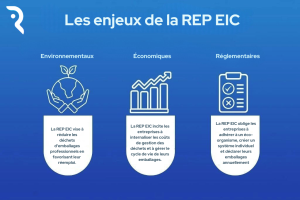
The implementation of the EIC REP, and the management of packaging by producers, responds to environmental, economic and regulatory issues.

Environmental issues

The main objective of the EIC REP is to address the growing problem of waste generated by professional packaging. According to the Ministry of Ecological Transition, nearly 13 million tonnes of packaging waste were generated, all packaging combined, of which 8 million tonnes were professional packaging.

The REP professional packaging aims not only to improve the recycling rate of packaging, but also to encourage its reuse, that is, to recover packaging to reuse it in the same circuit, without transformation. For example, reusable bins, crates or pallets can be recovered, washed and reused several times, thus reducing the need to produce new packaging.

Economic issues

One of the main economic objectives of the EIC REP is to have producers internalize the costs of waste management, rather than leaving them to local authorities or citizens. This

encourages companies to take charge of the entire life cycle of their packaging, from design to end of life.

Regulatory issues

In France, although several EPR channels already exist, the management of professional packaging was still insufficiently structured. With this new channel, companies covered by the EIC EPR will have to meet several obligations:

– Join an approved eco-organization: companies can choose to join an eco-organization approved by public authorities. These eco-organizations are responsible for the collection, recycling and treatment of packaging placed on the market;

– Implement an individual system: companies that prefer to directly manage the collection and processing of their packaging must implement their own management system, known as an “individual system”;

– Make an annual declaration: regardless of the option chosen (eco-organization or individual system), all companies must declare, each year, the quantities of packaging placed on the French market. This declaration is mandatory and allows the authorities to monitor the evolution of professional packaging waste flows.

The operation of the EPR for industrial and commercial packaging is based on collaboration between companies, eco-organizations and public authorities to ensure optimal management of professional packaging throughout its life cycle.

the EIC REP responds to environmental, economic and regulatory challenges


Washing reusable packaging: an opportunity for the EIC REP

Reusing packaging is a very interesting lever in the logic of the EIC REP. It allows for a significant reduction in the production of new packaging, while minimizing the environmental impact linked to waste management.

In this context, ETERNITY Systems positions itself as a key player by offering complete solutions for the washing, repair, collection and redistribution of reusable packaging. These solutions are designed to guarantee the cleanliness and compliance of packaging so that it can be optimally reused. industrial washing not only helps maintain high standards ofhygiene, but also to extend the lifespan of packaging, while avoiding the waste of resources, reducing CO2 emissions and reducing the need for new materials.

What is the progress of the REP industrial and commercial packaging?

Initially scheduled to come into force on January 1, 2025, the regulatory implementation of the EIC REP is behind schedule. Indeed, to date, in spring 2025, the final texts, including the implementing decree and supplementary orders, have still not been published in the Official Journal. Although ADEME has piloted a prefiguration study in 2023, followed by a public consultation on the draft decree until 2024, the analysis of the returns is still in progress. And according to the CiFREP report of March 13, 2025, although significant progress has been made in preparing the EIC REP, several regulatory aspects remain pending. Among the main elements pending are the decrees relating to the scope of packaging, which must precisely define the types of packaging concerned by the sector, as well as the specifications of the eco-organizations, which will establish the operational rules for the structures responsible for the collection, recycling and treatment of packaging.

Thus, the effective launch of the REP packaging sector is now envisaged for the first half of 2026.


By adopting the requirements of the REP EIC, Companies can not only reduce their environmental impact, but also optimize their costs and actively contribute to a circular economy. Responsible management of professional packaging is necessary to meet current ecological and economic challenges.

Take the lead now and explore our washing solutions ETERNITY Systems to help you implement sustainable actions for your industrial and commercial packaging. Our white paper “EIC – reuse mode” is available by clicking on the button below:

I download the white paper

CSR: Everything you need to know about the CSR approach and company obligations

CSR: Everything you need to know about the CSR approach and company obligations 

CSR, also called Corporate Social Responsibility, refers to the voluntary integration of social, ethical and environmental concerns into the management and economic activities of the company. With the growth of sustainable development issues, CSR is establishing itself as a crucial means of transformation, competitiveness and attractiveness for companies. 

Implementing and structuring an effective and efficient CSR policy can be a real challenge, as it requires not only sufficient resources, concrete involvement of the entire company and monitoring of the actions implemented. 

How to make Corporate Social Responsibility an effective engine of growth? ETERNITY Systems explains everything about the different dimensions of CSR – definition, best practices, reference standards – and how to integrate CSR into a sustainable and effective strategy. 

CSR in brief

La Corporate Social Responsibility (CSR) is a voluntary approach that aims to integrate social, environmental and ethical concerns into the operations and strategy of companies. It is based on three fundamental pillars: 

  • The social, which encompasses quality of life at work and inclusion, 
  • The environment, which aims to reduce the ecological impact of activities, and 
  • The economy, which promotes sustainable and ethical development. 

Today, CSR is a real lever for competitiveness and differentiation, allowing companies to anticipate market developments and meet the growing expectations of consumers, employees and investors.

Implementing an effective CSR policy requires a structured approach: 

  • Make a diagnosis of the issues
  • Define measurable objectives
  • Deploy concrete CSR actions et 
  • Perform a performance monitoring via reporting and a CSR report. 

The integration of CSR certifications and labels are there to strengthen the credibility of commitments and facilitate access to new economic opportunities. Eternity Systems, we have made CSR a driving force for transformation, structuring our practices to reconcile performance, responsibility and innovation.

What is CSR? 

La Corporate Social Responsibility (CSR) is defined by the European Commission as "the responsibility of companies for their effects on society". CSR thus refers to contribution of businesses to sustainable development issues, by integrating a social and environmental dimension into their economic concerns and into their relations with stakeholders.

For the voluntary company, it is about integrating responsible and sustainable practices into its economic operations and strategies to have a positive impact on society and preserve the environment and its resources, while remaining viable.

In France, the adoption and consideration of CSR within company policy is in clear progression. Indeed, according to a study by the Kantar marketing research and consulting institute, published in 2024, 78% of the companies surveyed have a team dedicated to Corporate Social Responsibility, and 76% have allocated a specific budget to this approach, compared to 68% in 2022.

Companies that integrate a CSR approach into their strategies or policies must demonstrate their ability to adopt responsible practices in terms of resource management, working conditions and ethical business practices. These actions represent an opportunity to increase consumer and investor confidence, while anticipating future market requirements.

What is the difference between CSR and ESS?

The difference between CSR and ESS is that CSR transforms the way traditional businesses operate, while the ESS (Social and Solidarity Economy) is based on a solidarity economic model of social utility. 

CSR applies to all companies of all sizes and in all sectors, and is based on a voluntary approach to integrating social, environmental, and ethical issues into the company's activities. The SSE, on the other hand, brings together organizations whose primary objective is solidarity and social utility (cooperatives, associations, mutual societies). 

What is the difference between CSR and ESG?

CSR is a management approach that aims to integrate sustainable development commitments into their strategy and operations, while ESG (Environment, Social and Governance) is an external analysis tool, used mainly by investors, financial analysts and regulators to measure the extra-financial performance of companies. 

ESG is therefore a set of criteria that allow us to assess the extent to which a company takes environmental, social, and governance issues into account. CSR and ESG are often considered complementary. 

Corporate Social Responsibility is an essential approach for businesses


What are the three main pillars of CSR?

CSR is based on 3 pillars:

  • The societal pillar (have a positive impact on society), 
  • The economic pillar (be economically viable),
  • The environmental pillar (be more environmentally friendly). 

Each pillar of Corporate Social Responsibility structures the commitment of companies to responsible and sustainable growth, to a positive impact on society while remaining economically viable

The social pillar: investing in people 

Commitment and social responsibility are the first foundation of CSR. They concern aspects such as quality of life at work, diversity, inclusion, training, and the protection of employee rights. 

A socially responsible company invests in what is human and thus ensures that optimal working conditions are offered to promote employee development and retain talent. Motivated and engaged employees have been shown to increase productivity, reduce absenteeism, and strengthen the company's brand image. 

Employees who feel good in a company will therefore want to get involved, promote the company's values, and stay in the company for the long term. This positive work environment then translates into more stable, more cohesive, and therefore more efficient work teams.

The environmental pillar: the heart of CSR 

The environmental pillar of Corporate Social Responsibility concerns the responsible management of natural resources and reduction of negative impacts of economic activities. It is also within this framework that the AGEC law, which increasingly requires companies to make efforts in terms of waste and recycling. 

This is why integrating an eco-responsible strategy is essential, in a context where environmental regulations are becoming stricter and consumers are favoring committed brands. This involves reducing CO₂ emissions, optimizing energy consumption, waste management or even the adoption of a sustainable logistics

The integration of these environmental practices of CSR is not limited to a regulatory constraint, it represents above all a strategic opportunity for anticipate market requirements et attract a clientele increasingly attentive to ecological commitments. 

The economic pillar: successfully combining profitability and sustainability

This pillar rests on business ethics, financial transparency and sustainable innovation. This means that a responsible company must not only generate profits, but also ensure its sustainability and competitiveness by integrating social and environmental criteria into its strategy. These criteria may include a flexible teleworking policy, an inclusive recruitment policy, reducing its carbon footprint by optimizing waste management, etc. 

It's about integrating consumer and investor expectations regarding social responsibility to strengthen competitiveness and attract investors to build customer loyalty. Transparency and commitment have become differentiating factors, and companies that make this strategic shift increase their competitiveness and build trust with customers and partners. 

 There are 3 pillars of CSR: social, environmental and economic

Why adopt a CSR approach in business? 

If CSR is a voluntary approach, it has above all become a means of shape a company's reputation, to redefine the company-employee relationship, and also to open up new economic opportunities. The benefits of Corporate Social Responsibility are multiple and go well beyond simply meeting legal obligations. 

We can identify 3 main benefits of CSR: 

  • Powerful lever for the company's reputation and image,
  • Advantage for attracting and retaining talent within the company,
  • Engine of growth and competitiveness.

A powerful lever for the company's reputation and brand image 

In France, according to a study on the social and environmental responsibility of large groups as seen by the French, carried out by the GoudLink institute, near 9 out of 10 consumers expect companies to act responsibly and respond to social and environmental issues. 

The numbers speak for themselves: a company committed to CSR inspires confidence. Consumers, better informed and more demanding, now expect brands to adopt transparent and responsible practices. They are no longer just passive buyers; they, along with civil society, are now active stakeholders. 

An advantage for attracting and retaining talent within the company 

In a highly competitive job market, a company's ability to attract and retain top talent no longer depends solely on salary or financial benefits. Employees, especially younger generations, are primarily seeking meaning in their work and want to grow within an organization that shares their values. 

According to MEDEF's CSR perception barometer in business, 40% of employees believe that the quality of life at work is a priority for their company. Furthermore, this study indicates that 79% of employees plan to stay with their company in the next three years when it has a CSR function or department (compared to 68% without a CSR department). 

This correlation suggests that Corporate Social Responsibility initiatives, including the promotion of quality of life at work, contribute to employee loyalty.

Companies that consider the well-being of their employees, promote diversity and engage in social causes create a more attractive and sustainable corporate culture. Result : more engaged, more productive teams ready to invest in the long term.

An engine of growth and competitiveness

CSR is a powerful economic lever, because it allows to optimize costs (energy saving, waste reduction, better resource management), to access new markets and attract investors who are increasingly attentive to CSR criteria. 

Indeed, investors are no longer satisfied with an immediate financial return; they now demand that companies demonstrate their ability to create sustainable value by integrating CSR into their sustainable development approach. 

Companies that adopt a structured CSR policy not only improve their image among stakeholders: they more easily attract financing, access preferential rates and limit their exposure to legal risks. 

At ETERNITY Systems, we understood that part of the growth is based on a transparent governance, responsible management of resources and a committed social policyBy integrating Corporate Social Responsibility into the heart of our strategy, we anticipate investors' expectations and stakeholders, while consolidating our position in the marketAdopting an ambitious CSR approach means not only responding to current challenges, but also building a sustainable competitive advantage for the future.

CSR helps attract and retain talent while being a strong means of growth.

ETERNITY Systems and good CSR practices 

At ETERNITY Systems, a specialist in the industrial washing of reusable packaging and containers, the company fully embodies the principles of the circular economy. With this identity in mind, it has undertaken a CSR approach structured around three clear pillars:

  • People  
  • Planet 
  • Society

This vision is based on a deep conviction: rethinking industries through the prism of reuse is not only possible, but necessary.

“Employees are involved on a daily basis in the CSR approach, particularly in water management during the application of our water management policy or when they are trained on climate issues such as our new Climatelier training.”

The HR and CSR Development Manager, reporting to the Group HR Director and involved in the management committee, states that by empowering individuals to act, controlling its environmental impact and strengthening its local roots, ETERNITY Systems makes its commitments a lever for sustainable performance.

Concretely, the teams ofETERNITY Systems translate this ambition into tangible actions:

  • Creation of secure zones to avoid co-activities between pedestrians and industrial vehicles
  • Involvement in local initiatives such as Empower HER in Canada or Run for Planet in France
  • Continuous optimization of resource management – ​​water, electricity, gas – with increasing attention paid to sorting, recovery and recycling of waste.

All of these efforts are measured by precise performance indicators, gathered in a CSR report public, accessible to all. While the company does not yet have official certification, an analysis is underway, illustrating a clear desire: to develop its commitments towards a recognized level of excellence.

What is the regulatory framework for Corporate Social Responsibility? 

The concept of CSR is part of a structured regulatory framework supervised by international standards, recognized certifications and Team legal obligations which guarantee the credibility, security and effectiveness of the steps taken. These current standards allow companies to adopt compliant CSR policies to best respond to stakeholders. 

CSR standards 

CSR standards, ISO 14001, 9001, 45000, 50001, 20400 and 26000, establish clear guidelines to help companies integrate sustainable development into their strategy. The best-known CSR standard is ISO CSR 26000, a methodological guide intended to support companies in developing their CSR approach. It covers 7 areas: 

ISO CSR 26000 helps companies integrate sustainable development into their strategy


The objective of this ISO 26000 standard is to guide businesses in the integration of the principles of Corporate Social Responsibility, while providing them allowing the flexibility to adapt their approach to their sector of activity, their size and their specific challenges. 

It should be noted that ISO 26000 is neither binding nor mandatory. However, it is widely adopted by companies because it offers a structuring and internationally recognized framework. This allows companies to formalize their CSR commitment, align their practices with stakeholder expectations, and strengthen their credibility with investors, customers, and partners. 

In addition, CSR standards are often integrated into QHSE procedures, which aim to simultaneously improve quality, hygiene, safety and the environment within the company. It is also this global approach that allows for better risk management and optimization of the company's social and environmental performance.

CSR certifications and labels 

Beyond the standards, some companies choose to obtain a CSR certification, which officially attests to their CSR commitment. These certifications are issued by independent organizations and make it possible to assess the impact of the policies implemented: 

  • CSR Engaged Label (AFNOR) : based on ISO 26000, this label assesses the maturity of companies in terms of social responsibility and their capacity for continuous improvement;
  • B Corp : a demanding, internationally renowned label awarded to companies that meet high standards in terms of social, environmental impact and performance and transparency;
  • ecovadis : it is a platform for evaluating the CSR practices of companies, used in particular by large groups to select their responsible suppliers;
  • Label Lucie 26000 : this is the first French CSR certification aligned with ISO 26000, awarded to companies with a structured and coherent approach to sustainable development.

CSR certification helps strengthen the company's credibility with its customers, partners and investors. 

The regulatory framework for CSR 

Although Corporate Social Responsibility is based on a voluntary approach and there is no binding law on sustainability, regulations are evolving to impose CSR obligations on companies, particularly in terms of transparency and reporting of activities at both social and environmental levels. 

  • CSRD Directive (Corporate Sustainability Reporting Directive) : In 2024, this new European directive, replacing the NFRD (Non-Financial Reporting Directive), has broadened the scope of companies affected by the non-financial reporting obligation. From now on, companies with more than 250 employees and a turnover of more than €40 million will have to publish detailed data on their environmental, social, and governance impact.
  • Extra-Financial Performance Declaration (DPEF) : in France, listed companies and certain large companies must publish a report detailing their commitments and actions in terms of sustainable development.
  • PACTE law : promulgated in 2019, this law consolidates the CSR of companies. Indeed, since this law, thearticle 1833 of the Civil Code has been amended so that the corporate purpose of all companies includes consideration of social and environmental issues. On the other hand, Article 1835 of the Civil Code has been amended to allow companies to integrate, if they wish, a purpose directly in their statutes. Finally, the mission-driven company status was created, allowing companies to formalize social and environmental objectives in their statutes, in addition to their profit motive.

To implement a CSR strategy, you must proceed in stages

How to implement an effective CSR strategy in a company? 

Implementing a CSR strategy is based on a rigorous analysis, a gradual integration into governance and total transparent communicationTo successfully complete these different stages and make Corporate Social Responsibility a real lever for performance, each company must follow a precise and adapted methodology: 

  • Carry out a CSR diagnosis,
  • Define the company's CSR objectives,
  • Build an action plan,
  • Communicate with CSR stakeholders.

CSR diagnosis to identify important issues

A CSR assessment assesses a company's social, environmental, and economic impact. Through this analysis, the company can identify strengths, weaknesses, and areas for improvement in terms of sustainable development. This assessment is based on several factors: 

  • A CSR audit, which can be conducted internally or by an external expert, to analyze the company's performance on environmental, social and governance criteria,
  • A stakeholder map, in order to understand the expectations of customers, employees, suppliers and investors,
  • A study of CSR issues specific to the sector of activity of the company, in order to align the strategy with market requirements and current regulations.

The CSR report obtained at the end of the diagnosis will serve as a basis for building a relevant and measurable action plan.

Define the company's CSR objectives

Setting clear and consistent CSR objectives helps structure the approach and ensure its effectiveness. Objectives must be aligned with the company's overall strategy and integrated into the teams' daily lives to ensure a lasting impact. Thus, CSR objectives must be:

  • Specific: in line with the company's strategic priorities.
  • Measurable : with defined monitoring indicators.
  • Achievable: realistic and adapted to the organization's capabilities.
  • Aligned with standards and benchmarks: such as ISO 26000, the UN's SDGs (Sustainable Development Goals), or the requirements of ESG investors.

Structured CSR governance is essential to ensure the consistency and effectiveness of established objectives. This involves the appointment of a CSR manager or a dedicated team, responsible for steering the strategy and coordinating initiatives across all company departments.

Build an action plan and launch concrete CSR projects

Once the CSR objectives have been defined, concrete CSR actions must be put in place. CSR project must be deployed in a progressive manner and adapted to available resources. It may include actions such as:

  • Optimization of internal processes to reduce environmental impact (energy saving, waste management, sustainable logistics).
  • The development of a strong social policy (gender equality, inclusion, well-being at work).
  • The establishment of a CSR platform to centralize the company's commitments and initiatives, facilitate monitoring and sharing of results.
  • The integration of CSR criteria into purchasing and supplier relations to promote a responsible supply chain.

Each CSR project must be accompanied by a timetable, allocated resources and rigorous monitoring of results.

Communicating with CSR stakeholders

CSR communication, both internally and externally, is essential to give credibility to a company's commitments. This means not only informing, but also mobilizing employees, customers, investors, and partners.

To achieve this, the company must have strong internal communications (social media, intranet, etc.) to raise awareness and involve employees. It also requires open dialogue with stakeholders, through regular consultations and exchanges.

The CSR report is a written document that presents the company's CSR commitments and actions

How to measure and optimize your CSR strategy in business? 

For a CSR approach to be relevant, it must be based on tangible data and regular monitoring. It is therefore necessary to first define precise CSR indicators that will cover environmental, social, and governance dimensions. 

This data is then integrated into a written document called a CSR report. The CSR report will enable us to measure the progress made, identify areas for improvement and promote the results obtained over the year. 

This CSR report generally corresponds to a annual reporting, shared internally and externally. This helps to promote the company's efforts among employees and with customers and partners, in order to unite all stakeholders around progress in sustainable development. 

On the other hand, a CSR strategy only works if it is understood and supported by all employees. To achieve this, invest in CSR training, whether on environmental issues, der Kreislaufwirtschaft or even responsible purchasing, can be very useful for different levels of the company: 

  • For leaders and managers: to integrate CSR into strategic decision-making.
  • For employees: to involve them and give them concrete tools to apply CSR commitments on a daily basis.

A company that focuses on CSR training not only ensures better implementation of its policy, but also promotes internal innovation, by encouraging teams to propose new sustainable solutions.

Optimizing your Corporate Social Responsibility strategy often requires specialized expertise to go beyond basic actions. This is why many companies call on external CSR consulting, capable of providing an objective perspective and supporting the optimization of the approach.


The future of industry depends on responsible models, by integrating CSR at the heart of its strategy. It is an essential lever for combining economic performance, environmental impact, and social commitment. Structured and supported at all levels of the company, it allows for the construction of a sustainable model, aligned with stakeholder expectations and the challenges of tomorrow.

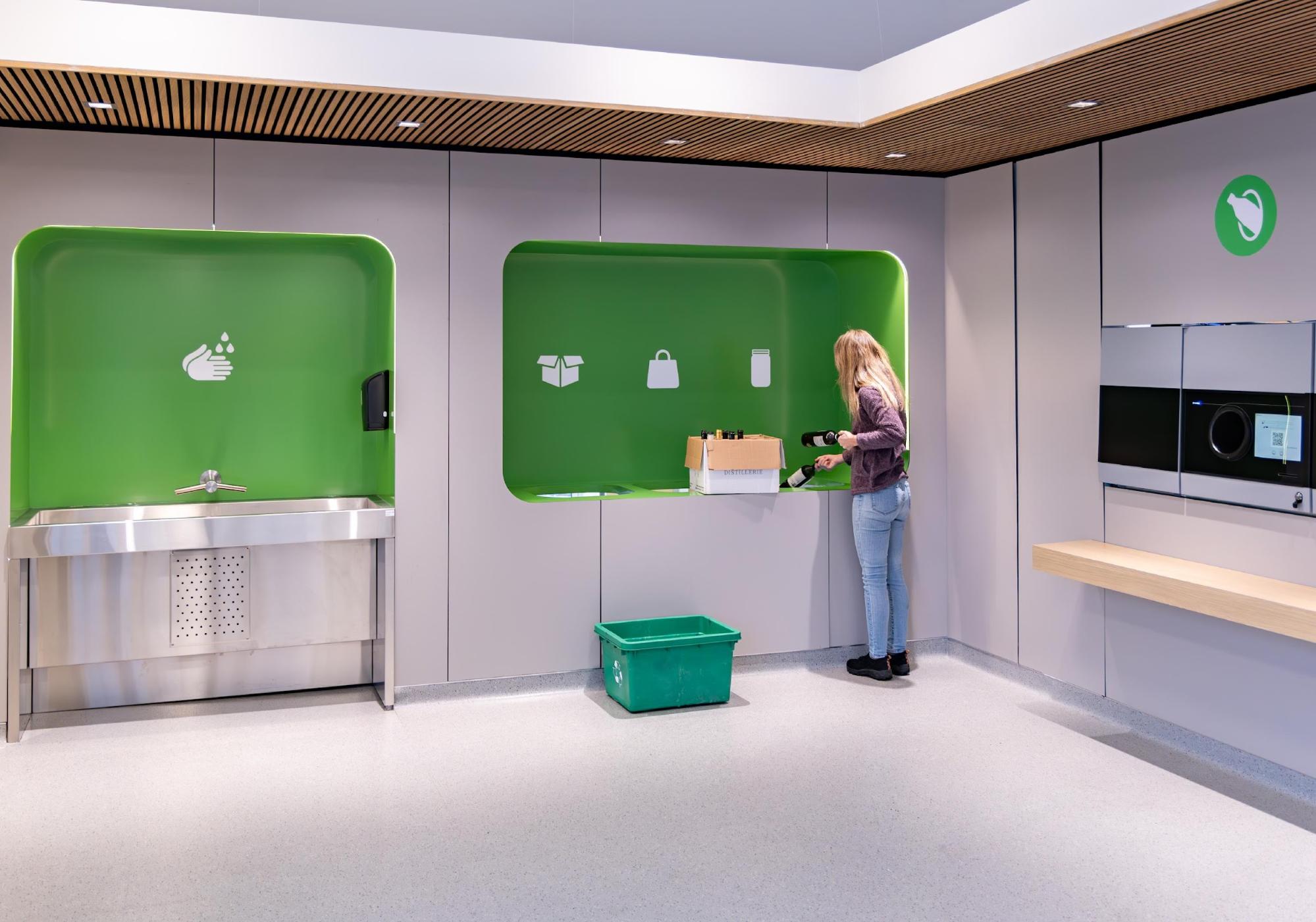
What is reuse?

Le reuse is about giving a second life to products and materials in order to reduce waste, extend the life of products and preserve natural resources. An essential component of the circular economy, reuse plays a vital role in the responsible management of resources. 

How does reuse work and how can companies integrate it into their practices? At ETERNITY Systemswe washed more 7 billion reusable packages Since our inception. This practical guide summarizes our field experience to help you understand, evaluate and implement reuse in your organization.

Reuse in brief 

  • Reuse consists of giving new life to products by reusing them for their initial use,
  • Reuse is distinguished from recycling, not requiring transformation major product,
  • Reuse comes in three main forms: direct reuse, reuse after simple cleaning or a light revision, reuse of components.
  • The benefits of reuse are numerous : significant reduction of waste and exploitation of natural resources, optimization of business costs, generation of jobs in various sectors, etc.

What is reuse?

According to Article L541-1-1 of the Environmental Code, the definition of reuse corresponds to “ any operation by which substances, materials or products which are not waste are reused for the same purpose as that for which they were designed. » 

Reuse is part of a waste prevention approach and circular economy, because it extends the life of products and reduces the amount of waste generated. Unlike recycling, which transforms the product into waste before reusing it, reuse has the advantage of maintaining the initial status of the product or material reused. 

The three forms of industrial reuse

In practice, reuse can manifest itself in three different ways:

  • Direct reuse : an object is used again for the same purpose for which it was designed. 
  • Reuse after cleaning or overhaul : a light cleaning or a simple overhaul allows an object to be reused in its current condition. This is the core of the business at ETERNITY Systems, plastic crates from the agri-food industry can be reused after cleaning and quality control.
  • Reuse of components : in some sectors such as construction, building components can be recovered during deconstruction and reused in new projects. For example, wooden beams, windows, etc.
slide

1 liter of water processed in our factories is used on average 300 times — versus single use for conventional washing. We reuse more than 70% of the water consumed per cycle.

Key number

Reuse gives a second life to products instead of turning them into waste

What is the difference between reuse, repurposing and recycling?

La main difference between reuse, repurposing and recycling is that a reused product is not considered waste and does not undergo any transformation, while a reused or recycled product is considered waste and undergoes a treatment or transformation process. 

Key practices of the circular economy, each of these concepts has its specificities and advantages: 

  • Reuse : reuse of a product in its original state or after a light cleaning or simple revision. The product retains its status as a product, not becoming waste, and is used for the same purpose for which it was designed. Reuse is considered the most virtuous practice, because it allows the shelf life of products to be extended without major transformation.
  • Reuse : " any operation by which substances, materials or products which have become waste are used again ". Reuse thus involves a waste treatment process, whereas reuse does not involve a transformation process. Reuse allows products to be given a second life while adapting them to current needs.
  • Recycling : " any recovery operation by which waste, including organic waste, is reprocessed into substances, materials or products for the purposes of their original function or for other purposes”. Recycling therefore involves the transformation of materials of a product into a new product. The initial product is destroyed and its materials are reused to create something new (old clothes into new pieces). Recycling reduces the consumption of virgin raw materials, but requires industrial processes and energy.
slide
Comparative Table – Reuse / Recycling
CriterionReuseReuseRecycling
Product statusOne product remainsGoes through the waste statusTurned into waste
TransformationNone (or light cleaning)Processing processDestruction + remanufacturing
Use afterIdentical to the original useIdentical or differentNew product
Environmental impactThe weakestIntermediateThe highest
Example packagingPlastic crate cleaned and then recirculatedContainer deposited at the waste disposal center then re-contractedCrushed, melted, remolded plastic


In summary, Reuse is the most direct and ecological practice, followed by reuse and finally recycling. Each of these practices contributes to waste reduction and the preservation of natural resources, but at different levels of efficiency and environmental impact.


What are the legal provisions governing reuse?

Reuse is governed by several legal provisions: AGEC law, reuse clauses, and even European directives: 

  • AGEC law : the anti-waste law aims to accelerate the transition to a circular economy by reducing waste and promoting reuse and recycling.
  • Re-employment clauses in public contracts : public buyers, such as government departments, local authorities and their groups, have an obligation to acquire goods resulting from reuse, repurposing or incorporating recycled materials. This obligation is defined by Article 58 of Law No. 2020-105 of February 10, 2020 relating to the fight against waste and the circular economy
  • La European directive 2008/98/EC : establishes the legislative framework for waste management within the European Union, and strongly encourages reuse as a priority in the waste hierarchy.
  • PPWR file The European Packaging and Packaging Waste Regulation will be phased in starting in 2026. It will mandate reuse rates for each packaging category, particularly for transport and industrial packaging. Companies that plan their reuse strategy now will gain a significant competitive and regulatory advantage.

These legal provisions aim to create a framework favorable to reuse, by encouraging economic players to adopt more sustainable practices and by making producers responsible throughout the product life cycle.

slide

Public buyers (state, local authorities, hospitals) have thelegal obligation since 2021 to integrate reused products into their marketsThis represents a direct commercial opportunity for companies that offer reusable packaging.

To remember

What are the benefits of reuse?

Reuse has many advantages, particularly on the environmental, economic and also social levels: 

  • Waste reduction : reuse helps reduce the amount of waste generated by extending the life of products. This contributes to reducing greenhouse gas emissions associated with waste management. 

For example, in the catering or events sector, the use of reusable plates, cups and cutlery (made of glass, stainless steel or hard plastic) helps to limit the production of disposable tableware. 

  • Preservation of natural resources : reuse helps preserve natural resources by reusing existing materials. By avoiding the extraction of new raw materials, we reduce the environmental impact associated with the exploitation of natural resources.
  • Financial savings : Reuse saves money by reducing the cost of purchasing new products. For example, many industries, including food, logistics and retail, use reusable plastic crates instead of continually purchasing single-use cardboard or plastic crates.

ETERNITY Systems facilitates this model by offering industrial washing services and revaluation of plastic crates, guaranteeing their cleanliness and compliance with health standards.

  • Job creation : reuse contributes to the creation of jobs in the sectors of collection, sorting, repair and resale of second-hand products. 

For example, ETERNITY Systems employs staff to collect used reusable packaging from companies, sort it according to its condition, then wash, inspect and repair it if necessary before putting it back into circulation. This process requires specific skills in maintenance, industrial hygiene and in logistics, thus creating many jobs. 

  • Awareness and education : Reuse raises awareness among individuals and businesses about the importance of preserving the environment and reducing waste. By adopting reuse practices, we contribute to collective awareness and a change in behavior in favor of sustainability. 
slide

1 liter of water is used ~300 times in our closed system. More than 70% of the water The consumed CO₂ is reused per cycle. The CO₂ savings avoided vary depending on the packaging and the distribution channel, but are consistently superior to a disposable packaging scheme.

Data ETERNITY

How to implement reuse in business?

The implementation of reuse in companies, in a circular economy logic, requires a structured approach and the involvement of all stakeholders in the organization. Here are the key steps to integrate reuse into company practices:

  • Step 1 – Diagnosis : carry out a diagnosis of the resources available in the company. That is to say, identify the materials and equipment that can be reused.
  • Step 2 - Action Plan : once the diagnosis has been made, an action plan must be developed to integrate reuse into the company's processes. This involves defining the objectives and actions to be implemented.
  • Step 3 – Training : it is essential to raise awareness and train employees in reuse practices.
  • Step 4 – Follow-up : it is important to set up monitoring of reuse actions to measure the progress made and adjust actions based on feedback. Performance indicators can be defined to assess the impact of reuse on waste reduction, savings made and preservation of natural resources.

ETERNITY Systems – An example of an industry serving reuse

ETERNITY Systems is a company specializing in washing reusable containers, offering concrete solutions to promote reuse within companies. It implements several initiatives to promote reuse and integrate this practice into the heart of its daily activities: 

  • Packaging recovery and reuse programs: 

The company offers container recovery programs, such as crates, bins, buckets, pallets, boxes, gastronorm containers, cups, etc. These containers are collected, then subjected to an industrial washing process to guarantee optimal cleanliness, with QHSE standards demanding, in order to be able to reuse these containers. Thanks to an optimized method to consume as little water, detergents and energy as possible, we manage to reuse more than 70% of the water consumed and 1 liter of water can be used almost 300 times.  

  • Management and logistics for reuse

Beyond washing, ETERNITY Systems supports companies with logistics services and traceability tailored to their needs. This includes the reception, sorting and shipping of goods, the repair of packaging, storage or even transport and rerouting to companies. This not only facilitates, but also optimizes, the circulation of reusable containers in order to allow companies to maximize the efficiency of their operations while reducing their environmental impact.

  • Innovation and sustainability in industrial washing

ETERNITY Systems stands out for its commitment to innovation and sustainability in the field of industrial washing. By optimizing cleaning processes and minimizing resource consumption, the company contributes to reducing waste and promoting a circular economy. This approach allows partner companies to benefit from an ecological and economical solution for the management of their reusable containers. 

By integrating these practices, our company demonstrates that reuse can be an efficient and environmentally friendly solution, while supporting innovation and sustainability in various industrial sectors.

Take action now and find out our practical guide to set up the reuse of your industrial and commercial packaging.

slide

In numbers

+0 billion
of packaging processed in 30 years
0 countries
Presence in France, Germany, Spain, Portugal, the United States and Canada
0%
water reused per cycle
+0 times
or the number of times 1 liter of water is used

QHSE (Quality, Health, Safety, Environment), the major challenge for companies

La QHSE, or Quality, Health, Safety and Environment, embodies a strategic approach deployed by companies to meet the major challenges related to employee safety in companies and sustainable and responsible production. A voluntary and non-mandatory approach, QHSE is part of a logic of continuous improvement of the company and a limitation of its environmental impact. 

What exactly is meant by QHSE and how can you implement this approach in your company? ETERNITY Systems explains everything about the Quality, Hygiene, Safety and Environment approach, its advantages and the certifications that result from it. 

The concept of QHSE is a voluntary approach to be integrated into the company

QHSE in summary 

The concept of QHSE aims to voluntarily structure and optimize a company's practices around four fundamental pillars: 

  • quality : guarantee quality products and services,
  • Hygiene : ensure the cleanliness and hygiene of processes,
  • Safety : protect employees from occupational risks,
  • Environment : limit the environmental impact of activities.

Adopting a QHSE approach also means meeting the requirements of international standards such as ISO 9001 (Quality), ISO 45001 (Safety), and ISO 14001 (Environment) which certify compliance with companies' regulatory requirements in terms of quality, hygiene and safety.

A QHSE policy is a real strategic lever for companies, allowing them to reduce accidents and costs related to non-conformities, increase operational efficiency thanks to better controlled processes, and strengthen the confidence of customers and partners by displaying a clear commitment to quality, safety and the environment.


At ETERNITY Systems, we take QHSE rules seriously, our integration resulting in: 

  • Rigorous controls in the processing of reusable packaging, 
  • Optimizing water and energy consumption in its facilities, thus contributing to a sustainable circular economy or,
  • The presence of a person dedicated to QHSE management in each country to supervise the proper implementation of practices.


What is QHSE?

QHSE is a set of voluntary practices aimed at ensuring the company's compliance with Quality, Health, Safety and Environment standards. It is in particular a global approach to preventing and managing risks in the workplace, improving the quality of products and services, and preserving the environment, based on these four pillars:

  • Quality: It is a company's commitment to exceeding its customers' expectations by offering products and services that inspire confidence: accurate information, data protection, solid guarantees and impeccable after-sales service. 
  • Hygiene: It covers practices aimed at ensuring the cleanliness and healthiness of facilities, products and processes. It is particularly essential in sensitive sectors such as the food industry, health and cosmetics.
  • Security : It is about protecting every employee, customer and partner from the risks associated with the company's activities. This involves, for example, preventing accidents in the workplace and ensuring optimal working conditions.
  • The environment : is acting to reduce the ecological impact of the company by adopting responsible and sustainable practices. This involves, for example, reducing waste, optimizing energy consumption, and rational management of natural resources. At ETERNITY Systems, we are making this commitment a reality by limiting the use of single-use plastics through the cleaning, storage and transport of your reusable packaging.


The QHSE policy is based on four pillars: quality, safety, hygiene and environment

What are the differences between QSE and QHSE? 

QSE is a broader approach that brings together the dimensions of Quality, Safety, and the Environment. QHSE, for its part, stands out by specifically integrating an additional component: Hygiene. It is therefore a part of QSE, which also includes HSSE, QSSTE, SSE and CSR.

Thus, QHSE integrates specific requirements related to the health and cleanliness of processes, installations, and products. A QHSE policy is therefore particularly suited to sensitive sectors such as the food industry, health and cosmetics, where the management of contamination risks is essential.

What are QHSE certifications?

QHSE policies are governed by 3 cross-functional standards which certify that a company complies with recognized standards in terms of quality, hygiene and safety: ISO 9001 standard, ISO 45001 standard and ISO 14001 standardThese standards not only ensure compliance with regulatory requirements, but also strengthen the trust of customers and partners by demonstrating a concrete commitment to sustainable and responsible practices: 

  • The ISO 9001 standard dedicated to quality: international standard that defines the requirements for a quality management system. Its objective is to ensure that the products and services provided meet customer expectations and needs while continuously improving internal processes.
  • The ISO 45001 standard dedicated to security: standard that establishes a framework to improve working conditions and ensure a safe and healthy working environment. This helps companies reduce accidents, improve employee well-being and strengthen their regulatory compliance.
  • The ISO 14001 standard dedicated to the environment: It provides a framework and guidelines that aim to reduce ecological impact while optimizing the use of resources. At ETERNITY Systems, it guarantees reusable packaging washing processes designed to reduce water and energy consumption, thus reinforcing our commitment to sustainable practices.

The specificities of QHSE related to hygiene

As part of a QHSE approach, specific hygiene tools and regulations complement QHSE certifications, particularly in sensitive sectors such as the food industry or health: 

  • The HACCP (Hazard Analysis Critical Control Point) : is a risk management method that identifies, evaluates, and controls food safety hazards throughout the production chain. It ensures that food products are safe by preventing biological, chemical, or physical contamination. At ETERNITY Systems, HACCP certified, this approach is applied carefully to ensure that the agri-food packaging are cleaned and disinfected according to strict protocols, eliminating any risk of contamination.
  • Le Hygiene Package brings together a set of European regulations designed to ensure the safety of food at every stage of its production, processing and distribution. It requires facilities that comply with health standards and rigorous product traceability, so that companies can guarantee food safety while complying with legal requirements.


Do you want to adopt a QHSE approach and obtain certification? You can go through an approved body such as AFNOR to submit your application. Make sure that your practices comply with the requirements of the 3 key standards that make up QHSE: ISO 9001 (Quality), ISO 45001 (Safety), and ISO 14001 (Environment).

QHSE certification is governed by specific certifications

What are the advantages of a QHSE approach in business?

Engaging in a QHSE approach within a company of any size can have several advantages on an economic, environmental and human level. A company that adopts QHSE management will not only:

  • Increase business performance, 
  • Strengthen its brand image, 
  • Protect employees from risks,
  • Comply with regulatory requirements. 

Regulatory conformity 

In many industries, quality, safety and environmental regulations are becoming increasingly stringent. Failure to comply can result in fines, business interruptions or even reputational damage. The QHSE approach helps businesses anticipate these requirements and stay compliant.

Improving performance

The implementation of a QHSE approach allows to improve productivity by aligning practices with recognized QHSE standards, such as ISO 9001. This involves better management of resources, rigorous controls at each stage, and precise planning. 

Risk reduction

QHSE rules are also a powerful tool for anticipate and prevent risks such as workplace accidents, environmental incidents, or even contamination in sensitive sectors. Thanks to the integration of standards such as ISO 45001 and methods such as HACCP, companies identify risks and implement preventive measures. 

Strengthening the brand image 

Adopting a QHSE approach demonstrates a clear commitment to responsible and transparent practices. Certifications such as ISO 9001 or ISO 14001 provide tangible evidence that the company meets high standards in terms of quality, safety and the environment, thus inspiring confidence among consumers and partners.

How to implement a QHSE policy within a company? 

Implementing a QHSE policy within a company requires a structured and step-by-step methodology:

  • The first step is to establish a diagnosis : that is, assess the current situation and the needs of the company in terms of quality, hygiene, safety and environment. To do this, the company can rely on internal or external audits in order to correctly identify its strengths and weaknesses. 
  • The second step is to define the QHSE objectives : once the diagnosis has been made, the company must set clear and measurable objectives. For the sake of consistency, it is important to align these objectives with the company's overall strategy. 
  • Then, for a QHSE policy to be successful, it requires the involvement of all employees. It is therefore essential not only to train teams in QHSE issues, but also to appoint dedicated managers to the management of the process. For example, at ETERNITY Systems, a person is dedicated to QHSE issues in each country.
  • Finally, once the actions have been organized and implemented in the company, rigorous and regular monitoring is required, via performance indicators, to measure the impact of the actions implemented and identify areas for improvement. Indeed, QHSE is not a one-off approach, but an evolving process. This is why implementing a QHSE policy requires a strong commitment and mobilization of all employees.


Several steps are necessary to implement a QHSE policy in a company

How to train in QHSE?

Several training options exist depending on the needs of professionals: 

  • Online training, often certifying, allow you to acquire the basics of ISO 9001, 14001 or 45001 standards as well as methodologies such as HACCP;
  • Specialized organizations, such as AFNOR or recognized schools, also offer in-depth courses dedicated to QHSE management, ranging from short sessions to professional diplomas;
  • For businesses, it is possible to organize internal training to raise awareness and train teams on QHSE issues. Consulting firms also offer personalized support to effectively integrate the process.


You now know everything you need to know about the QHSE approach. Adopting this approach quickly, focused on quality, hygiene, safety and the environment, allows you to improve your performance while remaining compliant with international standards and strengthening your commitment to a sustainable future. 

For all your needs in washing, repairing, storing and transporting your packaging, trust ETERNITY Systems, and engage with us in a responsible transition towards sustainability.

Contact us