
Sustainable packaging: the complete guide
In accordance with the UN definition, sustainable packaging is designed, produced, used, and disposed of with a comprehensive environmental approach aimed at minimizing its impact on the planet throughout its entire life cycle. It is packaging that meets our current needs without […]

Article summary
- Sustainable packaging in summary
- What is sustainable packaging?
- How can a packaging material be classified as sustainable?
- Which packaging materials are truly sustainable?
- Sustainable packaging with innovative materials
- Reusable sustainable packaging
- What are the advantages of sustainable packaging?
- A highly positive environmental impact
- Economic and logistical benefits
- An asset for the company's brand image
- A response to evolving packaging regulations
- How to choose a sustainable packaging solution for your business?
- The technical performance of the packaging
- Determine the correct circularity loop
- Take logistical constraints into account
- Plan for repairs from the design stage
- Collaborating with suppliers
- Measure the impact
- How to make sustainable packaging profitable?
- ETERNITY Systems, industrial partner for your sustainable packaging
In accordance with the UN definition, sustainable packaging is designed, produced, used and disposed of with a comprehensive environmental approach aimed at minimize its impact on the planet throughout its life cycleThis is packaging that meets our current needs without depleting natural resources or compromising the ability of future generations to meet their own.
The durability of packaging depends not only on the material it is made of, but also on its Eco conceptionthat is to say its lifespan and the organization put in place after each use.
With 30 years of expertise in the industrial washing of reusable packaging, ETERNITY Systems explains what makes a truly sustainable packaging how this sustainability is verified and how to integrate sustainable packaging into your business.
Sustainable packaging in summary
- Sustainable packaging limits its impact throughout its entire life cycle. by reducing the amount of material used, reusing packaging when possible and recycling end-of-life materials.
- The durability of packaging depends on the material it is made of, but also and especially on its eco-design. that is, if it is designed to complete several rotations before becoming waste and being recycled.
- The durability of a material is assessed based on four criteria : the renewability of the resource, the capacity for reuse, the recyclability and the biodegradability, reinforced by recognized labels such as FSC, PEFC or Cradle to Cradle.
- Any material can become sustainable if it is designed for reuse.that is to say that a glass, stainless steel or plastic container remains sustainable as long as it is collected, washed, checked, repaired if necessary, and then put back into circulation.
- With reuse, sustainability ultimately depends on the ability to keep the loop functioning. Washing, inspection, repair, storage, and redistribution extend the lifespan of containers and reduce the need for new packaging. This is the core of [company name]'s expertise.ETERNITY Systems since 1994.
- Sustainable packaging meets regulatory requirements. with the AGEC law in France which aims for 10% of packaging to be reused or repurposed by 2027, as well as the European PPWR regulation, which strengthens requirements for reduction, recyclability, recycled materials and reuse.
What is sustainable packaging?
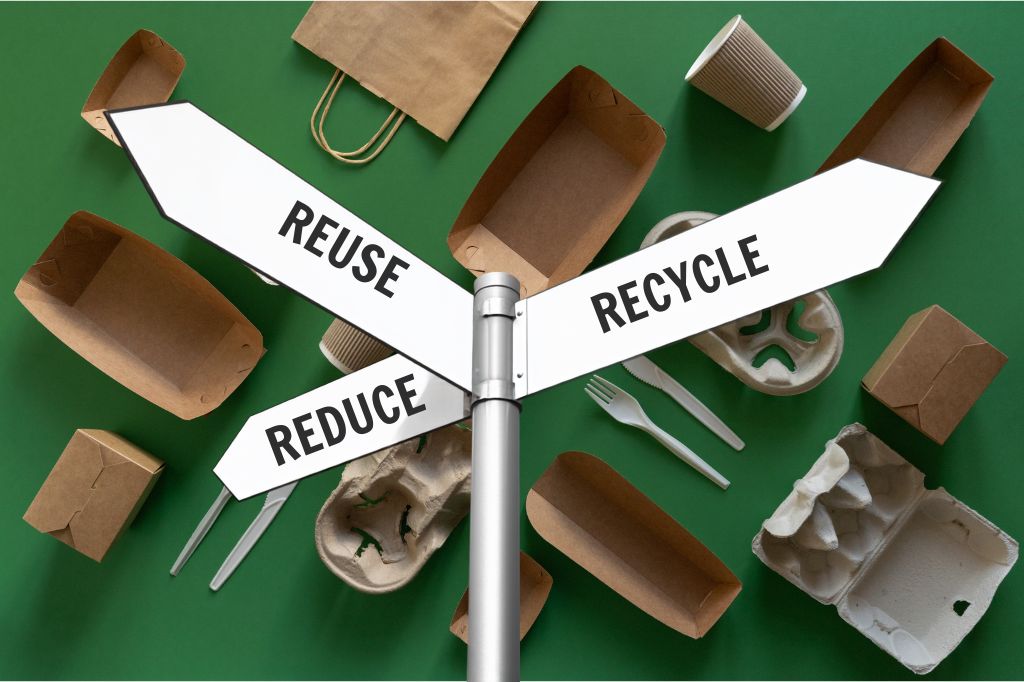
Sustainable packaging is packaging whose design, use and end of life are designed to reduce resource consumption and waste production. In other words, it must effectively protect its contents, while limiting the consumption of raw materials, energy and the amount of waste generated.
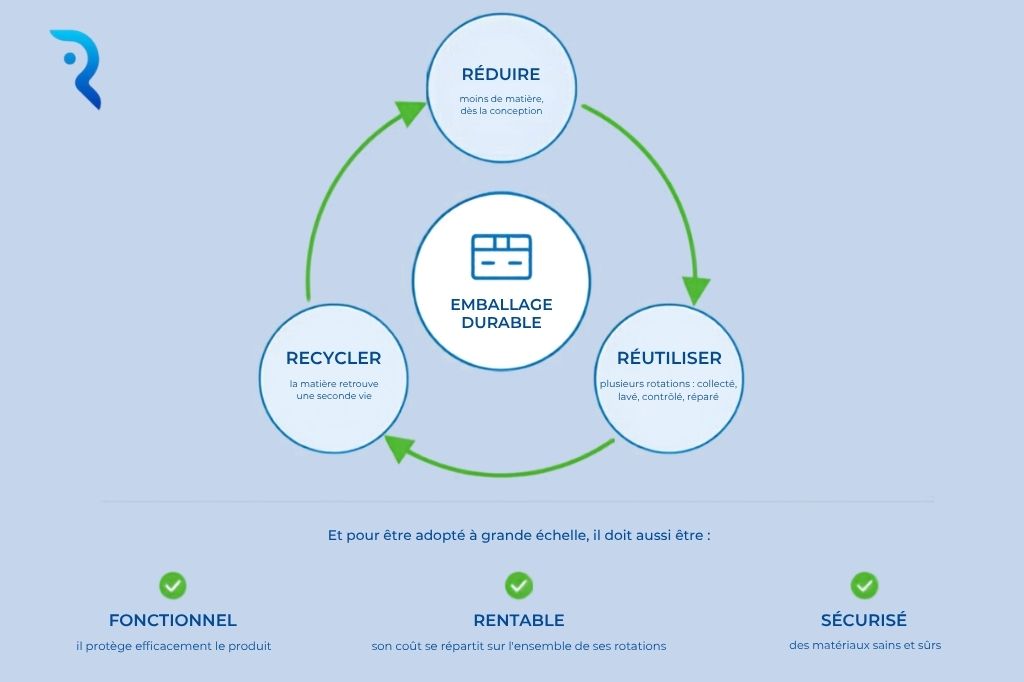
To be considered sustainable, packaging must generally rely on three main fundamental principles:
- Reduce : This involves optimizing the packaging design in order to minimize the amount of materials used.
- Reuse : packaging must be designed to be reused, meaning that it can undergo multiple rotations without becoming waste and be collected, washed, checked and repaired before starting a new cycle.
- To recycle : it must prioritize recycled and highly recyclable raw materials (such as paper, cardboard or certain plastics) to give materials a second life and fully integrate into a circular economy.
Furthermore, sustainable packaging must not only be environmentally friendly, it must also be:
- Functional : It must protect the product optimally and comply with applicable regulations.
- cost-effective Its manufacturing and purchasing costs must be consistent to allow for widespread adoption
- Secure : It must be manufactured from materials that are healthy and safe for human health and the environment.
How can a packaging material be classified as sustainable?
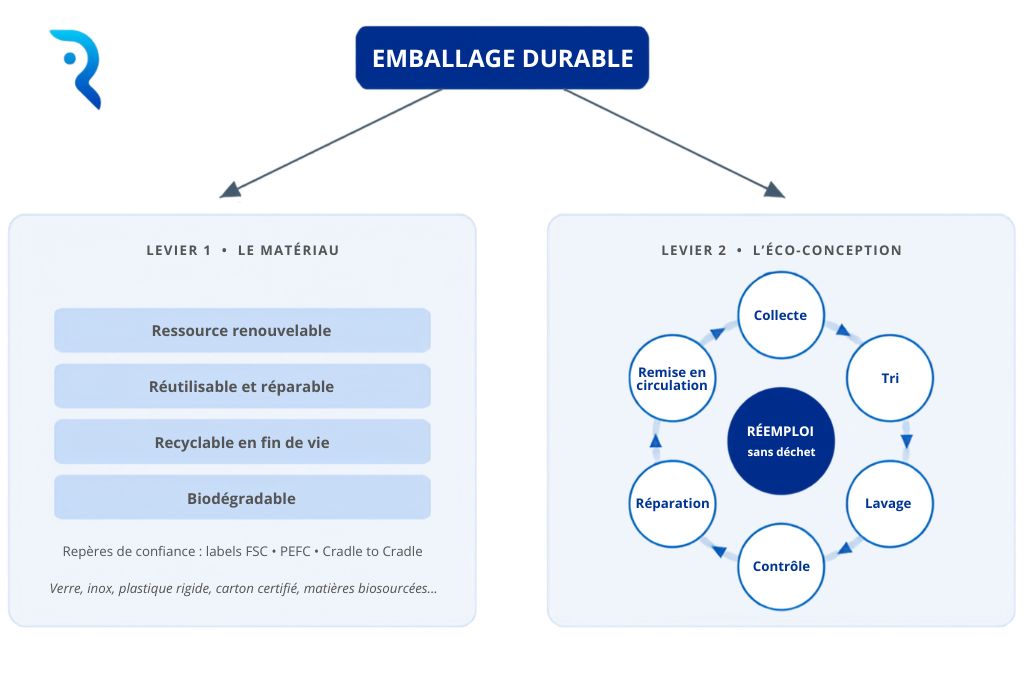
For a packaging material to be considered sustainable, it must have a minimal impact from its extraction to its disposal, prioritizing criteria such as:
- Renewability: The raw material must come from natural resources that replenish or regenerate themselves over time so as not to deplete the planet's natural reserves.
- Reuse: The material must be designed to withstand several successive cycles of use without its quality or performance being significantly altered.
- Recyclability: The material must be able to be collected and processed by recycling systems that are operational in practice in order to feed a circular economy. GlassAluminium or cardboard are perfect examples.
- Biodegradable: At the end of its life, under microbial action, the material should be able to decompose naturally in a few days or a few months.
In order to prove the responsible sourcing and sustainability of the material, Several certifications exist:
- The labels FSC and PEFC attest that the paper or cardboard comes from responsibly managed forests.
- The Cradle to Cradle label guarantees a positive overall impact and ensures that the material is part of a virtuous circular loop.
- The European Ecolabel validates the product's compliance with very strict European Union environmental requirements.
Which packaging materials are truly sustainable?
Some materials, such as recycled or certified paper and cardboard, wool, mycelium or certain bio-based materials, are considered sustainable because they can reduce the use of fossil resources and facilitate the end-of-life of packaging.
But sustainability also depends on how the packaging is used.This means that packaging made of plastic, glass, or metal can be sustainable. if it is designed to be reused many times, then collected, washed, checked, repaired if necessary and put back into circulation.
This means that to truly judge the durability of packaging, We need to go beyond the material itself and consider its manufacture, its lifespan, its number of uses, its logistics and its end of life.
Sustainable packaging with innovative materials
- Raw wool : 100% wool packaging is fully compostable at home and returns safely to the earth.
- Paper and cardboard Paper and cardboard are very present in secondary and tertiary packaging and shipping. They may contain recycled fibers and benefit from developed recycling channels. They are sustainable when they come from responsibly managed forests (guaranteed by FSC or PEFC labels) or from recycled materials.
- Biosourced materials A bio-based material is produced entirely or partially from biomass but is not necessarily biodegradable. This is the case, for example, with mycelium, created from fungi, which It decomposes naturally under the action of microbes, returning valuable nutrients to the soil.
Reusable sustainable packaging
Sustainable packaging can be because it is designed to be used multiple timesThat is to say, rather than being thrown away or recycled after a single use, They are collected, sorted, washed, and inspected. repaired if necessary, then put back into circulation, without ever becoming waste.
This could be the case:
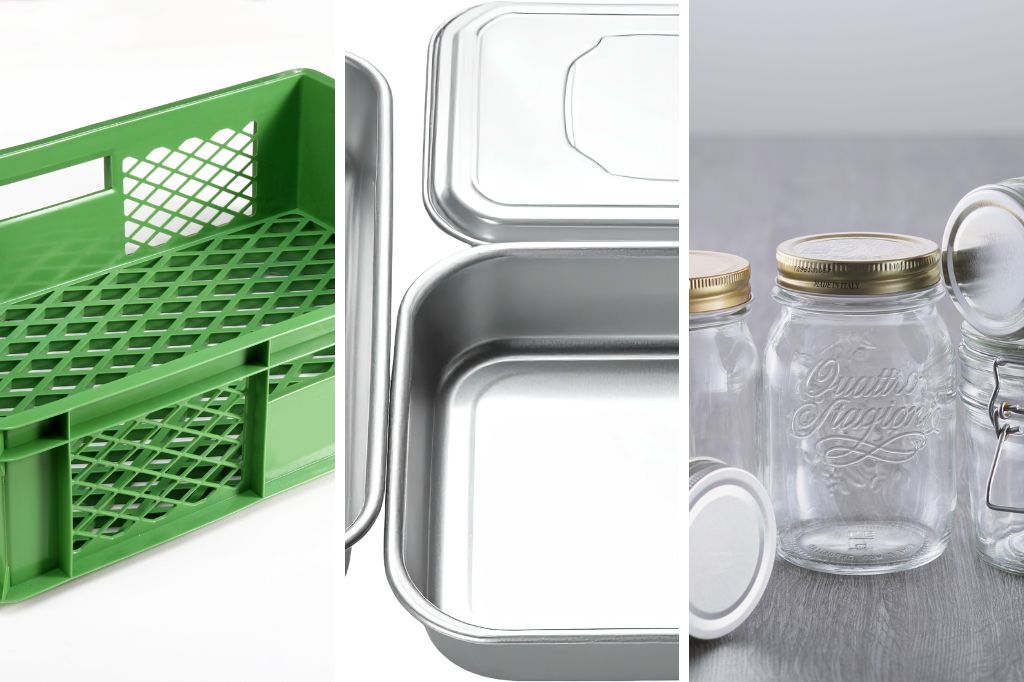
- Glass: it is suitable for many food packaging thanks to its properties and is particularly well suited to deposit systems and reuse for bottles and jars.
- Stainless steel and metals These include, for example, gastronorm containers, drums or technical containers which have high mechanical resistance and can be adapted for intensive use and withstand numerous cycles of use and washing.
- Reusable plastic: Plastic is often associated with single use, but there are alternatives with certain rigid plastic packaging specifically designed to withstand numerous rotations. Crates, logistics containers, and pallets, in particular, benefit from good impact resistance and a relatively low weight.Their environmental value then depends on their actual lifespan, their return rate, their ability to withstand successive washings and their recovery when they finally reach the end of their life.

What are the advantages of sustainable packaging?
Using eco-friendly packaging primarily allows us to:
- Reduce resource consumption and waste production,
- To prepare your business for evolving regulations and, in some models,
- To better control packaging-related costs,
- To have a better brand image among consumers.
A highly positive environmental impact
One of the primary objectives of sustainable packaging is to limit its impact on the environment by:
- Limiting the use of new resources : reuse This approach perfectly aligns with this logic because, rather than manufacturing new packaging for each use, the same container remains in circulation for several cycles. A crate, pallet, bin, or bottle can thus be collected, washed, inspected, and then reused.
- Reducing the carbon footprint The use of eco-responsible materials drastically reduces greenhouse gas emissions throughout the product's life cycle.
- Limiting the production of packaging waste In the case of recyclable packaging, the material can be recovered at the end of its use and used in a new manufacturing process. In the case of reuse, the goal is to prevent the packaging from becoming waste after its first use. Combining reuse, repair and recycling at the end of life is an ideal combination for making packaging sustainable.
Economic and logistical benefits
Eco-design practices and the use of recycled materials allow for a reduction in the costs of purchasing raw materials and the costs associated with managing and processing waste in the company. Although a more robust container may cost more to produce or purchase than single-use packaging, this initial cost is then spread over all of its rotations.
When the loop is correctly sized and the packaging undergoes sufficient rotations, reuse can thus reduce dependence on repeated purchases of new packaging.
An asset for the company's brand image
Buyers are fully aware of the impact of packaging and are looking for committed brands.
So, reduce single-use packaging, prioritize more suitable materials or implement a reuse loop allows us to show customers and partners that the company's environmental policy is concrete.
To remain credible, however, this communication must be based on measurable results :
- Quantity of packaging avoided,
- Number of rotations,
- Return rate,
- Shelf life of containers
- Proportion of packaging repaired.
A response to evolving packaging regulations
The development of sustainable packaging also responds to a profound evolution of the regulatory framework. In France, as at the European level, regulations are gradually seeking to reduce single-use packaging, improve its recyclability and develop reuse.
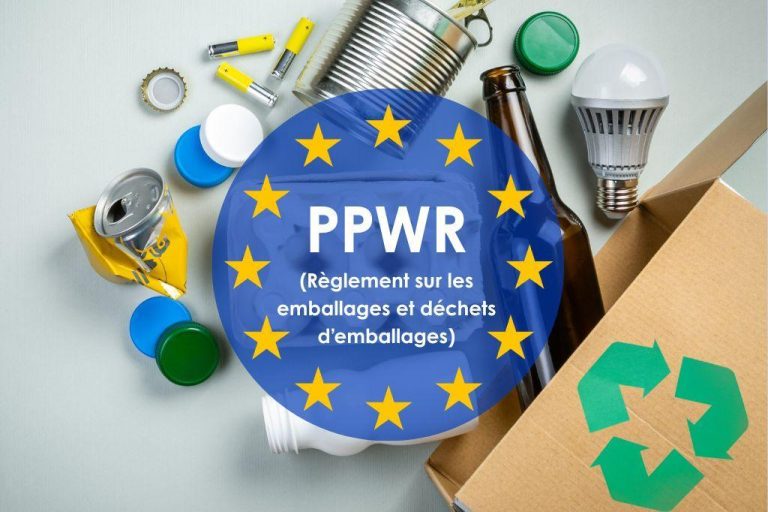
In France, the AGEC law has set a national trajectory aiming to achieve 10% of packaging placed on the market being reused or recycled by 2027. This progress is continuing at the European level with the Packaging and Packaging Waste Regulation (PPWR) applicable since August 12, 2026, which notably governs the reduction of packaging, its recyclability, the incorporation of recycled materials and the development of reuse.
How to choose a sustainable packaging solution for your business?
Choosing the most suitable sustainable packaging solution requires reconciling:
- technical performance
- Economic viability,
- Logistical constraints
- Environmental objectives.
The technical performance of the packaging
Before turning to a virtuous material, the'packaging must absolutely fulfill its role, which is to effectively protect the product. To do this, it is necessary to identify the constraints of the packaging such as its resistance to shocks, its impermeability to grease, etc.
Determine the correct circularity loop
If your logistics flows or your customers allow it, do the choice of reusable packaging that can be used for multiple cycles via collection, washing and recirculation.
If the packaging must remain single-use, make sure that it is made of materials with durable and certified properties.
Take logistical constraints into account
Environmentally friendly industrial packaging must be designed with its supply chain in mind. Because a reuse loop involves the return of packaging, transport distances and load factors have a direct impact on the system's performance. Collapsible, stackable, or nestable containers, in particular, can reduce the volume transported when empty.
Plan for repairs from the design stage
Planning for the possible repair of packaging is an approach that allows for the implementation of circular packaging solutions which consists of reducing the resources used, extending the life of the product and then recycling its material when it is no longer reusable.
Collaborating with suppliers
Switching to sustainable packaging requires adjustments to your supply chain. Work with suppliers who can reliably and ethically deliver sustainable materials and guide you in optimizing your processes.
Measure the impact
Conduct a complete Life Cycle Assessment (LCA) of your packaging (measuring water consumption, energy, carbon emissions and waste production, from manufacturing to disposal) to identify real areas for improvement.
How to make sustainable packaging profitable?
ADEME reviewed 39 life cycle analyses comparing reusable packaging and single-use packaging. For example, a Returnable glass packaging becomes more advantageous than single-use glass packaging from its fourth use onwards. The results depend on 4 parameters for sustainable packaging to live up to its promises.
- The number of actual reuses: It depends directly on the return rate of the containers. Packaging designed for one hundred rotations that only makes three due to a lack of organized collection loses all its advantage.
- The distance between the places of use and washing: The closer the car wash center, the better the outcome. A dense geographical network of car wash sites is a condition for performance, not just logistical convenience.
- Energy efficiency of washing: lWater, detergent, and energy consumption during cleaning directly impacts the overall balance. Effective washing makes the difference between a real gain and a transfer of impact.
- End-of-life recycling: lwhen reusable packaging is no longer repairable, its material must be recovered to close the loop.
ETERNITY Systems, industrial partner for your sustainable packaging
Sustainable packaging is only effective if the loop that keeps it circulating functions properly. Since 1994, ETERNITY Systems washes, inspects, repairs, stores and redistributes reusable packaging on behalf of manufacturers.
Their expertise guarantees that each container is washed, inspected, repaired and put back into circulation with a quality, hygiene and safety total food. This process extends the life of containers, transforming each bin or bottle into an asset that can be used dozens of times, thus drastically reducing waste production. Industrial washing is the only concrete answer to distinguish a true circular strategy from a mere promise of theoretical “recyclability”.
Our solutions cover three categories of containers:
- The primary packaging in glass, stainless steel or plastic for the food, cosmetics and detergent industries.
- The industrial packaging secondary and tertiary sectors of the supply chain.
- The containers of the collective catering.
Do you want to assess the reuse potential of your packaging? Our teams analyze your flows, test your containers in the laboratory, size the loop adapted to your volumes and support you from the study to the operation.
Contact us

Anthony ADAM
Communications and Marketing Manager at ETERNITY Systems, Anthony designs strategies and content to promote more sustainable consumption. He is a committed agent of change who combines creativity, rigor, and action to strengthen the visibility and impact of projects related to reuse and the circular economy.
These articles might also interest you

A project to reuse packaging?
Our teams support you from diagnosis to industrial washing, in Europe and North America.
Contact us