
Food packaging regulations: how to reconcile food safety and reuse?
All packaging intended to come into contact with food is governed by European Regulation (EC) No. 1935/2004, which stipulates that the packaging must not release any hazardous substances into the food or alter its taste, smell, or composition. This basic health standard is supplemented by specific regulations for each […]


Article summary
- Food packaging regulations in summary
- What are food packaging regulations?
- What regulations govern the food safety of food packaging?
- Framework Regulation (EC) No 1935/2004
- Regulation (EU) No 10/2011 on plastics
- Regulation (EC) No 2023/2006 on good manufacturing practices
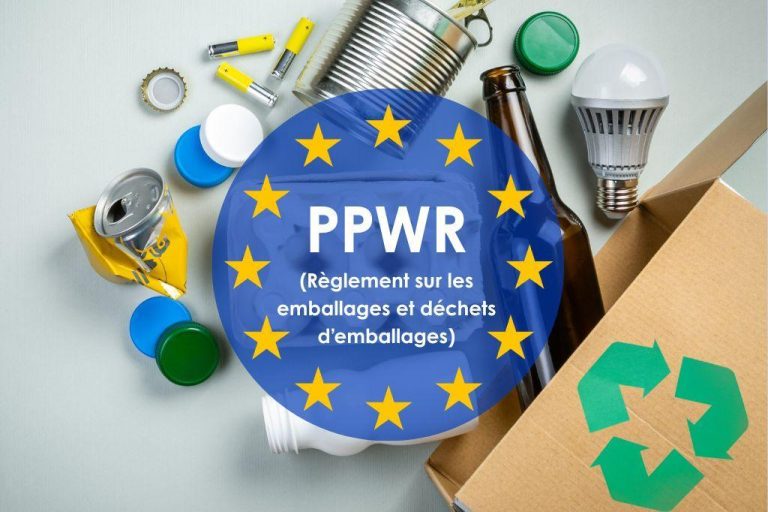
- The PPWR Regulation (EU Regulation 2025/40)
- Declaration of Conformity
- What environmental obligations are added to the health framework?
- Reusable food packaging: what are the health constraints and how can they be reconciled?
- The health challenge of reuse
- Certified industrial washing, guaranteed compliance
- Traceability and compliance after reuse
- What substances are monitored or prohibited for food packaging?
- What rules apply depending on the packaging material?
- Mandatory labeling and traceability
- Controls and sanctions
- How to recognize packaging suitable for food contact?
- ETERNITY Systems, partner in compliant food reuse
- FAQ
All packaging intended to come into contact with food is governed by European Regulation (EC) No. 1935/2004, which requires that the packaging must not release any dangerous substances into the food or alter its taste, smell or composition. This basic health framework is complemented by texts specific to each material, labeling and traceability requirements.
The food packaging sector is undergoing a profound structural transformation, dictated by a food safety objective coupled with a sustainability objective to reduce packaging waste, phase out single-use plastic by 2040 and develop the reuse of packaging.
This dual health and environmental requirement leads food industry manufacturers to the question of how to reconcile the safety of food-contact packaging with its reuse. With nearly 30 years of expertise in industrial washing, ETERNITY Systems provides an overview of food packaging regulations, how to recognize a compliant container, and the conditions for reuse.
Food packaging regulations in summary
- Le Regulation (EC) No 1935/2004 imposes on all materials in contact with food a principle of inertia which is to not release any dangerous substances and not alter the taste, smell or composition of the food.
- Texts supplement this foundation according to the material, notably Regulation (EU) No 10/2011 for plastics, with a list of authorized substances and limits of migration into food.
- In addition to health and safety, there is also a environmental aspect driven by the AGEC and EGALIM laws, PPWR regulations, REP EPRO, which aim to reduce waste and develop reuse.
- Le Reusing food packaging is compatible with regulationsProvided that industrial washing is certified, migration tests are conducted, and each cycle is traceable: this is the core business ofETERNITY Systems.
What are food packaging regulations?
Food packaging regulations refer to all the laws and regulations that guarantee that packaging in contact with food poses no risk to the consumer. This is what the Framework Regulation (EC) No 1935/2004 This refers to the principle of inertia, which strictly requires that all materials and objects intended to come into direct contact with food be sufficiently stable so as not to transfer their constituents into the food.
In practice, this rule is applied by controlling 3 mechanisms:
- Controlling the migration of substances: This is the major risk where a toxic substance present in the packaging (such as certain plasticizers, heavy metals, or residues) could contaminate the food. The quantities transferred must remain below limits deemed acceptable and safe for health.
- Traceability and declaration of conformity: To prove that this safety principle is respected, any company manufacturing packaging or new materials must carry out risk assessments on the substances used, provide written declarations of conformity to buyers and ensure full traceability of finished products.
- The overall scope: This requirement for safety and inertness applies not only to the final packaging, but also to all utensils, containers, machines and coatings used during the manufacture, storage or transport of food.
What regulations govern the food safety of food packaging?
Food packaging regulations in France are based on three pillars:
- A European framework text,
- Supplemented by regulations specific to each material
- And an obligation to provide documentary evidence.
Framework Regulation (EC) No 1935/2004
Regulation (EC) No 1935/2004 is the reference text for all materials in contact with food. Article 3 establishes the principle of inertia: a material must not release constituents into the food in quantities likely to present a danger to health or to alter the taste, smell and composition of the food.
This Regulation applies to all materials and finished articles intended for food contact, and entrusts the evaluation of substances to the European Food Safety Authority (EFSA). In France, Decree No. 2007-766 ensures the application of this European Regulation.
Regulation (EU) No 10/2011 on plastics
Regulation (EU) No 10/2011 specifically governs plastic packaging. It defines a "Union list" of authorized substances, sets specific migration limits for some of them, and imposes an overall migration limit of 10 mg/dm² of surface area in contact with food. Plastic packaging is only declared suitable for contact if its constituents are on this list and comply with these thresholds.
It is complemented by the Regulation (EU) No 2022/2016 for the suitability of recycled plastics for food contact.
Regulation (EC) No 2023/2006 on good manufacturing practices
Regulation (EC) No 2023/2006 imposes good manufacturing practices on the entire food contact materials sector. In practical terms, each manufacturer must have a quality assurance and control system that ensures that the materials produced are consistently compliant, and not on a case-by-case basis.
The PPWR Regulation (EU Regulation 2025/40)
The PPWR is a European regulation on packaging, which will apply directly from August 12, 2026, and significantly strengthens health requirements.
He establishes the strict ban on the use of PFAS (polyfluoroalkyl substances) in food packaging and requires minimizing the presence of heavy metals and bisphenol A (BPA). It will also require a systematic EU declaration of conformity supported by a comprehensive technical dossier.
Declaration of Conformity
The declaration of conformity is the document that certifies that packaging complies with applicable regulations. It is established by the manufacturer and transmitted throughout the supply chain, from the packaging producer to the end user. It specifies the validated conditions of use: type of food, temperature, and contact time. Outside of these conditions, conformity is no longer guaranteed.

What environmental obligations are added to the health framework?
Beyond food safety, food packaging is subject to environmental obligations aimed at reducing waste and phasing out single-use plastics. :
- The AGEC law It structures the French transition around the "3Rs": reduce, reuse, recycle. It sets targets for reducing and reusing packaging and schedules the end of placing single-use plastic packaging on the market by 2040.
- The EGALIM law which regulates institutional catering, including restrictions on plastic food containers for cooking and serving, in order to limit consumer exposure and plastic waste.
- The PPWR regulations (EU 2025/40), applicable from 12 August 2026, harmonizes the rules across the European Union. It strengthens recyclability requirements, sets reuse targets, regulates the declaration of conformity, and restricts certain substances such as PFAS in food packaging.
- Extended Producer Responsibility (EPR) for professional packaging (EPRO)The law, which comes into force on July 1, 2026, extends the principle of extended producer responsibility to industrial and commercial packaging. It establishes an eco-contribution linked to design, modulated according to the recyclability and reusability of packaging.
For a company, these regulations make the reduction of packaging waste both a regulatory objective and a lever for...circular economy.
Reusable food packaging: what are the health constraints and how can they be reconciled?
Reusable food packaging is perfectly compatible with health regulations, provided there is a controlled washing, control and traceability circuit.
The health challenge of reuse
Reuse refers to packaging designed to perform multiple rotations for the same purpose, via an organized industrial circuit.The main challenge in reusing food packaging is to avoid any contamination from one use cycle to the next. Three risks are being monitored: cross-contamination, the development of bacterial biofilms, and the transfer of allergens.
To control them, car wash centers, like those available ETERNITY SystemsThey apply the principle of forward flow, which strictly separates the "dirty" and "clean" zones so that a cleaned container never crosses a soiled container.
Certified industrial washing, guaranteed compliance
Industrial washing Certified cleaning is the operational solution to the health and safety requirements of reusing food packaging. It restores used packaging to a clean and hygienic state, ready for safe reuse. Specifically, the cleaning process works through a combination of four parameters: water temperature, the mechanical action of the jet, the concentration of cleaning products, and the contact time. Their precise dosage eliminates residues, microorganisms, and traces of allergens without damaging the container.
The centers ETERNITY Systems operate according to demanding standards, which guarantee a controlled and reproducible process:
- the HACCP method, which identifies biological, chemical and physical hazards at each stage and defines critical control points;
- ISO standards international quality and environmental management standards;
- IFS Food certification, recognized audit standard that assesses food safety and compliance in agri-food processes.
Each cycle undergoes internal bacteriological testing, supplemented by analyses from independent laboratories. This double check confirms the absence of residual contamination before the product is put back into circulation. This rigorous process is applied particularly to primary packaging, in direct contact with the food
This sanitary control is accompanied by environmental efficiency, framed by the QHSE approach where in each of our centers:
- One liter of water is reused on average 300 times.
- Over 70% of the water is reused in each cycle.
- Centrifugal drying reduces energy consumption by 40% compared to blown air drying.
Traceability and compliance after reuse
After reuse, the conformity of food packaging is maintained through migration tests and traceability of each rotation.
For a reusable container, the challenge is to prove that this neutrality is maintained over time, and not just during initial contact. Regulations therefore require testing through three successive cycles, designated M1, M2, and M3.
Traceability complements this guarantee by tracking each batch throughout its rotations. It allows us to:
- Knowing the number of cycles already completed by a container,
- To support its declaration of conformity
- To decide its fate: return to circulation, reparation or definitive withdrawal when it reaches its limit of use.
This traceability goes hand in hand with the return logistics : after use, empty packaging is collected from the customer and then returned to the washing center, ready for a new cycle.

What substances are monitored or prohibited for food packaging?
The regulations target certain substances deemed to be of concern to health, the use of which is restricted or prohibited in food packaging. Three families are receiving special attention.
- PFAS (Per- and polyfluoroalkyl substances): These are synthetic compounds sought after for their grease-resistant and waterproofing properties, found, for example, in certain paper and cardboard packaging. They are nicknamed "perennial pollutants," and their presence in food packaging is restricted beyond strict thresholds from August 12, 2026, under the European PPWR regulation.
- Bisphenol A (BPA), : its use in containers in direct contact with food is prohibited in France because it is identified as an endocrine disruptor.
- The NIAS (Substances not intentionally added): These are impurities in raw materials, manufacturing reaction products, or residues from recycling. Difficult to identify since they are not added intentionally, they are subject to increased monitoring, particularly for recycled materials.
What rules apply depending on the packaging material?
Although all materials must comply with the general principle of inertia established by Framework Regulation (EC) No 1935/2004, very specific rules apply depending on the type of packaging. Some materials are subject to dedicated European regulations, while others are subject to national regulations.
- Glass : inert by nature, It does not exchange any molecules with the food and retains neither taste nor odor. It is one of the safest materials for food contact, infinitely recyclable, and particularly well-suited for reuse after use. tri and washing.
- Plastic This falls under Regulation (EU) No 10/2011, which only authorizes listed substances and sets migration limits. Not all polymers are equally resistant to heat and washing. Therefore, for the most sensitive applications, there are... alternatives to plastic packaging.
- Cardboard and paper They do not have specific harmonized European regulations. They therefore remain subject to the principle of inertia of the framework regulation and to national recommendations, often with a surface treatment against moisture and grease.
- Metal (stainless steel, aluminium) is subject to national regulations setting composition criteria, because some alloys can release metals when in contact with acidic foods, an internal coating then ensures the protection of the food.
- Wood is only permitted for certain species and often requires a barrier, cling film or paper, in direct contact with the food, because its porosity more easily retains moisture and microorganisms.
Mandatory labeling and traceability
Labelling and traceability are obligations that allow the user to be informed and the origin of a material to be traced in case of a problem. Food packaging must include information necessary for safe use:
- Storage conditions,
- Precautions for use and, where applicable, the food contact logo.
Traceability, on the other hand, requires each operator to be able to identify its suppliers and direct customers, in order to track the path of materials along the chain.
Controls and sanctions
Compliance with food packaging regulations is monitored by the DGCCRF, which can impose sanctions in the event of non-compliance. The controls combine:
- On-site inspections,
- Document audits
- Samples analyzed in the laboratory.
In the event of an infringement, the company risks product withdrawal or recall, fines, or even prosecution when consumer health is endangered.
How to recognize packaging suitable for food contact?
Food-grade packaging is identified by a dedicated pictogram and proven by technical documents. Three elements allow us to identify and justify it.
- The food contact logo, represented by the symbol of a glass and a fork: it indicates that a material is intended for contact with food.
- The declaration of conformity, legally admissible documentary evidence detailing the texts respected and the conditions of use validated.
- The food safety certificate, or a certificate of suitability for food contact, issued based on migration tests carried out in the laboratory.
The glass-fork symbol provides information, but is not sufficient on its own: it is the declaration of conformity, supported by migration tests, that engages the manufacturer's responsibility.
ETERNITY Systems, partner in compliant food reuse
ETERNITY Systems supports food industry professionals in washing and reusing their packaging, in compliance with health requirements. The company manages the entire process: collection of empty packaging, certified industrial washing, bacteriological testing, migration testing, and return logistics. The customer thus benefits from reuse without having to deal with the complex health and regulatory requirements detailed throughout this article.
This expertise is built on nearly 30 years of experience, 18 industrial washing centers, and a presence in France, Spain, Canada, and Germany. At this scale, the company structures compliant reuse loops for food contact containers, regardless of volume. The acquisition of CLS, a specialist in automated bottle sorting, strengthens this capacity in the glass sector.
Do you want to reuse your food packaging while ensuring its sanitary compliance? Contact our teams for a customized washing solution.
FAQ
What is migration in food packaging?
Migration is the transfer of molecules from the packaging to the food it contains. Regulations distinguish between overall migration, which measures the total quantity of substances transferred, and specific migration, which targets a particular substance. Limits are placed on these transfers to protect consumer health.
Is reusable food packaging as safe as new packaging?
Yes, provided that it goes through a certified industrial washing circuit and regular checks. Reusable packaging undergoes migration testing, bacteriological testing, and traceability of each rotation. This system guarantees conformity equivalent to that of new packaging.
What is the HACCP method for food packaging?
The HACCP method is a preventative approach that identifies and controls biological, chemical, and physical hazards at each stage of the packaging lifecycle. Applied to food packaging and its washing for reuse, it secures each phase of the process. It is based on seven principles:
- Hazard analysis,
- Identification of critical points (CCPs),
- Definition of critical limits,
- Monitoring,
- Corrective actions,
- Verification and documentation.

Anthony ADAM
Communications and Marketing Manager at ETERNITY Systems, Anthony designs strategies and content to promote more sustainable consumption. He is a committed agent of change who combines creativity, rigor, and action to strengthen the visibility and impact of projects related to reuse and the circular economy.
These articles might also interest you
Supermarket packaging: how does reuse work?

Sustainable packaging: the complete guide
A project to reuse packaging?
Our teams support you from diagnosis to industrial washing, in Europe and North America.
Contact us